Troop Carrier Best Practices 2025
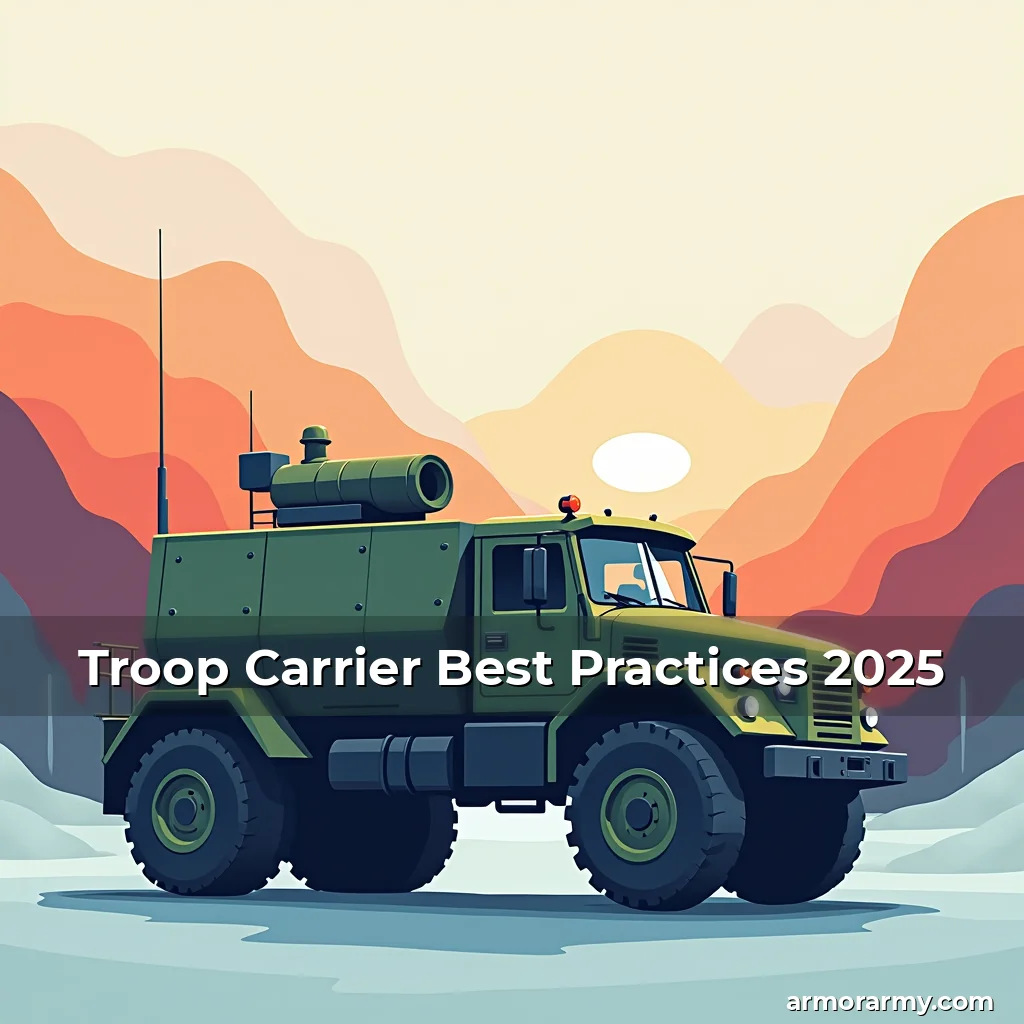
In an era where military logistics are becoming increasingly complex, understanding troop carrier best practices is essential for both seasoned professionals and newcomers to the armorarmy community. Troop carriers play a pivotal role in modern warfare by ensuring that soldiers reach their destinations swiftly and safely under varying conditions.
The evolution of troop carrier technology has introduced numerous innovations aimed at enhancing operational efficiency and soldier safety. From advanced materials to integrated communication systems, these developments have redefined how units deploy across different terrains and climates.
Fundamental Role of Troop Carriers in Modern Warfare
Troop carriers serve as the backbone of any military operation, enabling rapid deployment of personnel and equipment from secure bases to conflict zones. Their ability to transport troops quickly can determine the success or failure of critical missions.
These vehicles are designed not only for speed but also for versatility. They must navigate through rough terrain while maintaining stability during high-speed maneuvers or sudden stops. This adaptability ensures that forces remain mobile even in unpredictable environments.
Modern troop carriers incorporate features such as reinforced armor plating and ballistic protection. These enhancements safeguard occupants against potential threats ranging from small arms fire to improvised explosive devices (IEDs).
Additionally, internal configurations prioritize comfort and functionality. Adjustable seating arrangements allow for quick reconfiguration depending on mission requirements—whether transporting infantry squads or medical evacuation teams.
- Airborne Deployment Capabilities: Many troop carriers are equipped with paratrooper doors and harnesses allowing for aerial insertion operations.
- Cargo Space Optimization: Modular storage compartments enable efficient use of space for various types of cargo including ammunition, supplies, and specialized gear.
Strategic positioning within larger formations enhances situational awareness and coordination among allied units. Effective integration with command structures allows real-time updates regarding enemy movements and environmental changes.
The importance of maintenance cannot be overstated; regular inspections ensure optimal performance levels throughout extended deployments. Predictive analytics tools now help identify wear patterns before they lead to breakdowns.
Evolution of Troop Carrier Technology
The history of troop carriers dates back centuries when horse-drawn wagons were used extensively during wars. However, advancements in automotive engineering transformed them into highly sophisticated machines capable of operating under extreme conditions.
Military engineers continually refine designs based on battlefield feedback. Innovations include hybrid propulsion systems reducing fuel consumption without compromising power output—an asset particularly useful during long-range missions.
Digital cockpits featuring multi-function displays provide drivers with crucial data such as vehicle diagnostics, GPS navigation routes, and threat detection alerts. Such interfaces minimize cognitive load while maximizing decision-making capabilities.
Autonomous driving technologies represent another frontier being explored by defense agencies worldwide. Though still emerging, these systems promise increased survivability by minimizing human exposure during hostile encounters.
Technological Advancements Over Time
Early models relied heavily on mechanical components which often required frequent repairs due to limited redundancy mechanisms. Contemporary versions employ redundant electrical circuits ensuring continued operation despite partial system failures.
Integration of satellite communications enables seamless connectivity between deployed units and central command centers regardless of location remoteness. This capability facilitates coordinated strikes against enemy positions with minimal delay.
Recent developments involve biometric monitoring systems embedded within driver controls. These sensors detect fatigue indicators prompting automated rest intervals thus preventing accidents caused by exhaustion.
Such technological strides underscore the commitment towards improving both operational effectiveness and crew welfare across global armed forces.
Operational Efficiency and Strategic Planning
Optimizing troop carrier usage requires meticulous planning considering factors like distance covered, number of passengers transported, and available refueling points along designated routes.
Logistical planners utilize software simulations to model different scenarios assessing variables such as weather forecasts, road availability, and potential ambush sites ahead of actual deployments.
Route selection plays a significant role in determining overall mission success rates. Choosing paths with less likelihood of IED placements reduces risks faced by convoys significantly.
Collaboration between intelligence analysts and transportation officers ensures informed decisions regarding safe passage corridors tailored specifically for each assignment’s needs.
- Dynamic Route Adjustment: Real-time traffic management systems update convoy directions instantaneously responding to unexpected obstacles encountered en route.
- Predictive Maintenance Scheduling: Machine learning algorithms analyze historical performance metrics predicting component degradation timelines accurately.
Educating crews about emergency procedures enhances readiness levels during unforeseen circumstances. Regular drills reinforce protocols related to evacuations, first aid administration, and counter-sniper tactics.
Training programs emphasize teamwork cohesion necessary for executing synchronized maneuvers during combat situations involving multiple armored vehicles simultaneously.
Safety Protocols and Crew Training
Ensuring occupant safety remains paramount throughout every phase of troop carrier utilization—from pre-deployment preparations to post-mission debriefings.
Comprehensive training regimens cover everything from basic vehicle operation techniques to advanced survival skills applicable in desert or arctic environments respectively.
Crew members undergo rigorous psychological evaluations prior to assignments guaranteeing mental resilience needed to handle stressful wartime conditions effectively.
Emergency response kits stocked inside each unit contain essential items like trauma bandages, tourniquets, and communication devices vital for immediate action following injuries sustained during conflicts.
- Voice Recognition Systems: Implemented for hands-free control over certain functions reducing distractions while navigating hazardous areas.
- Hazard Detection Sensors: Positioned strategically around exteriors alerting operators about approaching dangers such as mines or snipers hiding nearby.
Periodic reviews of standard operating procedures (SOPs) ensure alignment with latest security guidelines issued by national defense authorities periodically revising existing regulations accordingly.
Simulated attack exercises conducted regularly build muscle memory enabling faster reactions times when genuine threats emerge unexpectedly during live engagements.
Environmental Adaptability and Terrain Considerations
Troop carriers must perform reliably irrespective of geographic challenges presented by diverse landscapes spanning deserts, jungles, mountains, and urban settings alike.
Engineers design suspension systems adaptable enough to absorb shocks experienced upon traversing uneven surfaces commonly found in off-road environments frequently utilized during tactical operations.
Climate-specific modifications cater to extreme temperatures influencing material choices for exterior coatings resistant against corrosion induced by saltwater exposure near coastal regions.
Modular interior setups facilitate swift transitions between roles—such as transforming standard passenger transports into ambulance-style units outfitted with life support apparatuses suitable for casualty evacuations.
- All-Terrain Tires: Equipped with deep grooves providing superior traction across muddy or icy ground conditions enhancing maneuverability substantially.
- Thermal Imaging Cameras: Installed externally assist in identifying heat signatures indicative of hidden adversaries lurking behind foliage during night operations.
Specialized variants exist for amphibious operations wherein hulls are sealed waterproofly permitting water crossings up to specified depths without jeopardizing onboard electronics integrity.
Urban warfare adaptations feature lower profile chassis reducing visibility targets making it harder for enemy snipers pinpoint exact locations easily identifiable otherwise.
Logistics Management and Supply Chain Integration
Efficient logistics management forms the foundation upon which successful troop carrier operations depend heavily given the vast quantities of resources involved daily.
Inventory tracking systems monitor stock levels automatically triggering replenishment orders once predefined thresholds are breached ensuring uninterrupted supply flows consistently.
Intermodal transfer facilities streamline movement processes transferring goods seamlessly between land, air, and sea platforms eliminating unnecessary delays typically associated with manual handling methods previously employed.
Data sharing agreements established between allied nations enhance interoperability standards promoting collaborative efforts towards common objectives aligned mutually beneficial outcomes.
- Blockchain Tracking Technologies: Utilized for transparent audit trails verifying authenticity of delivered commodities preventing counterfeit products entering supply chains undetected.
- AI-Powered Forecast Models: Analyze past demand fluctuations generating accurate projections aiding procurement departments plan budgets appropriately avoiding shortages or excesses.
Real-time monitoring dashboards display key performance indicators relating to fleet utilization rates helping administrators make timely adjustments optimizing resource allocations efficiently.
Supplier diversification strategies mitigate risks stemming from geopolitical tensions affecting single-source providers potentially disrupting continuity unless alternatives readily accessible exist globally.
Future Trends and Emerging Technologies
Ongoing research initiatives explore next-generation solutions poised to revolutionize current paradigms governing troop carrier functionalities dramatically altering future battlefields’ dynamics permanently.
Investments directed toward quantum computing aim at solving optimization problems currently unsolvable using conventional processors thereby streamlining logistical computations exponentially increasing accuracy levels achieved rapidly.
Nanotechnology applications offer promising avenues regarding self-repairing surface treatments extending service lifespans considerably diminishing maintenance burdens significantly lowering lifecycle costs incurred over time.
Bioengineered materials derived from natural sources present eco-friendly alternatives traditional synthetic compounds replacing them gradually decreasing carbon footprints left behind after decommissioning phases concluded successfully.
- Neural Interface Controls: Permit direct brain-computer interactions facilitating intuitive vehicle操控 via thought patterns alone bypassing physical limitations altogether.
- Self-Sustaining Power Sources: Incorporate renewable energy harvesting mechanisms converting ambient vibrations or solar radiation into usable electricity sustaining prolonged missions autonomously.
Augmented reality visors overlay digital information onto real-world visuals assisting navigators perceive surroundings clearly despite adverse weather conditions obscuring views naturally occurring outside normal visual ranges perceived visually.
Swarm robotics concepts envision fleets composed entirely autonomous drones collaborating collectively performing reconnaissance tasks simultaneously covering expansive territories thoroughly collecting intel comprehensively gathered systematically analyzed afterwards revealing strategic advantages gained decisively.
Conclusion
Troop carriers continue evolving alongside advancing technological frontiers shaping contemporary military doctrines profoundly impacting how forces conduct themselves dynamically adapting constantly amidst ever-changing geopolitical landscapes persistently.
By embracing innovative methodologies rooted firmly within proven principles guiding effective implementation ensuring sustainable progress forward benefiting all stakeholders engaged actively participating constructively contributing positively overall ecosystem thriving continuously renewed perpetually.

news is a contributor at ArmorArmy.com. We are committed to providing well-researched, accurate, and valuable content to our readers.