
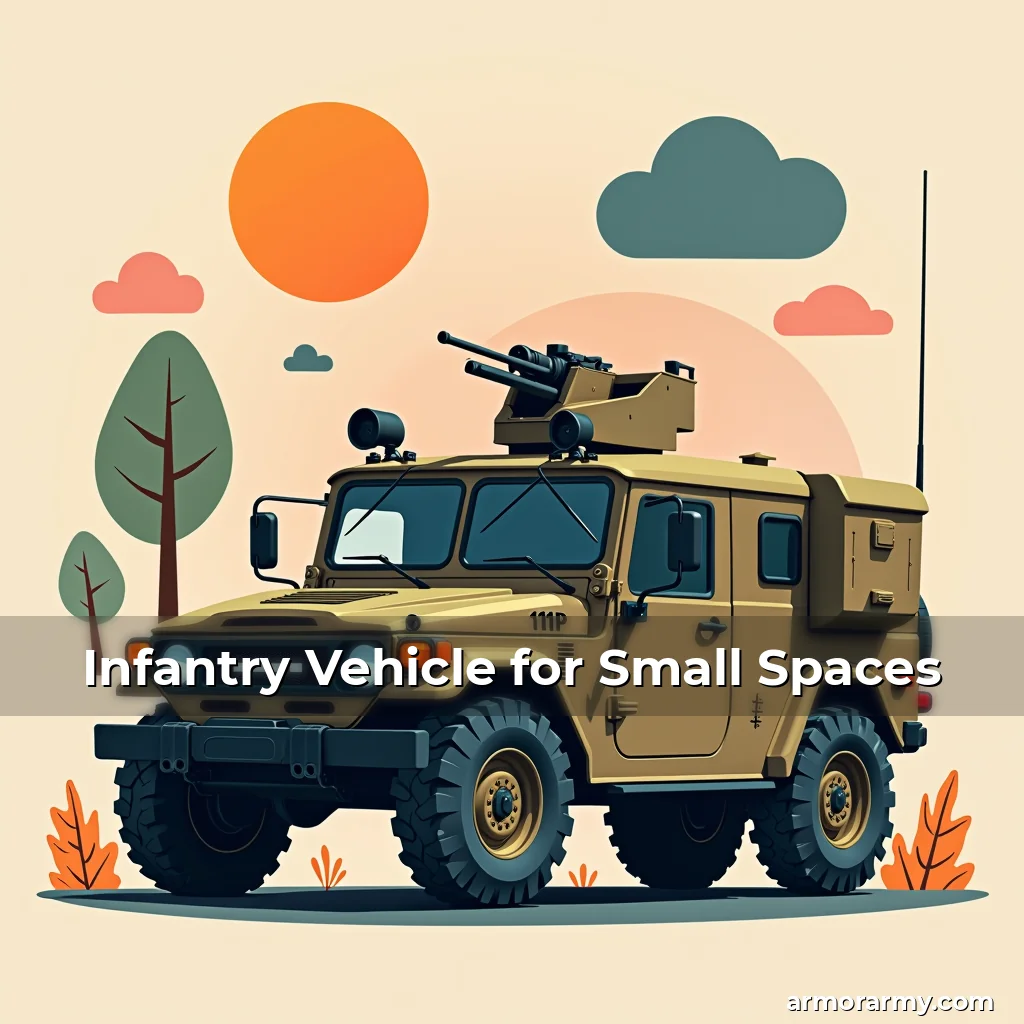
Infantry Vehicle for Small Spaces
In an era where urban warfare and compact environments are increasingly common, the role of infantry vehicles has evolved beyond traditional armored transport. These specialized platforms now prioritize agility, concealment, and adaptability while maintaining essential combat capabilities.
The modern infantry vehicle is designed not only for troop mobility but also for tactical flexibility within constrained spaces such as city streets, narrow alleys, and dense forests. This evolution reflects changing battlefield dynamics and technological advancements.
The Evolution of Infantry Vehicles
Early military transportation relied heavily on horse-drawn carriages and basic wheeled carts, which lacked both speed and protection against enemy fire. As conflicts shifted from open fields to urban settings, the need for protected mobile units became evident.
World War II marked a turning point with the introduction of half-tracks and early armored personnel carriers. These vehicles offered improved protection compared to their predecessors but still struggled with maneuverability in tight quarters.
- Horse-Drawn Carriages: Limited by terrain constraints and vulnerable to small arms fire.
- Half-Tracks: Combined wheels and tracks for better off-road performance during WWII.
Post-war developments saw the rise of fully enclosed APCs that could carry troops safely through hostile zones. However, these larger vehicles often proved too cumbersome for urban operations.
Modern infantry vehicles incorporate modular designs allowing them to be reconfigured based on mission requirements without compromising core functionality. This adaptability ensures they remain relevant across diverse operational scenarios.
Design Considerations for Urban Warfare
Urban environments present unique challenges requiring specialized design features. Narrow streets, multi-story buildings, and potential ambush points demand vehicles capable of navigating complex terrains efficiently.
Vehicles must maintain low profiles to avoid detection from above, whether by drones or aerial reconnaissance. Stealth technology plays a crucial role here, incorporating radar-absorbing materials and reduced thermal signatures.
Additionally, amphibious capability becomes vital when facing flooded areas or water obstacles commonly encountered in urban centers. Some models even feature inflatable pontoons for temporary buoyancy.
Modular weapon systems allow crews to mount different armaments depending on threat levels. This includes everything from machine guns to anti-aircraft missiles tailored specifically for close-quarters engagements.
Fuel efficiency remains another key consideration; longer missions require vehicles that can operate effectively over extended periods without frequent refueling stops.
Technological Innovations Enhancing Mobility
Advancements in hybrid propulsion systems have significantly enhanced the range and endurance of infantry vehicles. Combining internal combustion engines with electric motors provides greater fuel economy and reduces acoustic signatures.
Digital command and control interfaces enable real-time communication between crew members and external forces, ensuring coordinated responses during dynamic situations. Integrated GPS navigation aids in route selection and situational awareness.
Sensors such as LIDAR and thermal imaging cameras help detect threats hidden behind cover or in darkness. These technologies provide critical information before engagement occurs.
Autonomous driving capabilities are being tested for certain non-combat roles, potentially reducing human exposure to danger while performing routine tasks like supply deliveries.
Materials science breakthroughs have led to lighter yet stronger composite hulls that offer superior protection against blast impacts without adding excessive weight.
Tactical Roles Beyond Transportation
Military doctrine now recognizes infantry vehicles as multifunctional assets rather than mere transports. They serve dual purposes including forward operating bases, medical evacuation units, and mobile command posts.
Some advanced models include built-in power generators capable of supporting electronic warfare equipment or communications gear deployed at remote locations. This transforms the vehicle itself into a self-sufficient unit.
Integrated defense suites protect against RPG attacks, IEDs, and other improvised weapons used frequently in asymmetric warfare contexts. Armor plating varies depending upon expected threat levels.
Crew compartments are ergonomically designed for prolonged operation under stressful conditions, featuring climate control systems and reinforced seating arrangements.
Vehicle-mounted robots assist in reconnaissance missions or bomb disposal efforts, extending operational reach without risking additional lives.
Operational Challenges in Constrained Environments
Navigating through confined spaces requires precise engineering solutions. Obstacle avoidance sensors warn operators about potential hazards ahead, while adaptive suspension systems adjust ground clearance dynamically.
Urban warfare demands rapid deployment abilities; some vehicles can be disassembled quickly for easier transit through restricted access routes. Foldable components reduce overall footprint during movement.
Communication blackouts due to electromagnetic pulse (EMP) effects pose significant risks. Redundant backup systems ensure continued operation even after primary networks fail.
Rapid response times become critical in counterinsurgency operations where timing determines success rates. Pre-positioned maintenance kits allow for quick repairs away from support infrastructure.
Logistical considerations extend beyond fuel supplies – spare parts availability affects long-term sustainability in remote regions lacking established supply chains.
Training and Crew Proficiency
Efficacy depends greatly on well-trained personnel who understand how best to utilize each vehicle’s capabilities. Comprehensive training programs prepare crews for various contingencies they might encounter during missions.
Situational awareness drills teach recognition of environmental cues indicating imminent dangers such as snipers or traps laid along patrol routes. Simulation exercises replicate realistic combat scenarios using virtual reality headsets.
Cross-training among crew members fosters versatility, enabling any individual to take over critical functions if others become incapacitated. Regular proficiency assessments measure readiness levels accurately.
Team cohesion builds trust amongst soldiers working closely together inside cramped confines. Psychological evaluations assess stress management skills necessary for high-pressure situations.
Emergency ejection protocols are practiced regularly so everyone knows exactly what steps to follow during sudden emergencies like fires or explosions.
Future Trends Shaping Next Generation Designs
Artificial intelligence integration promises smarter decision-making processes onboard vehicles. Machine learning algorithms analyze incoming data streams faster than humans ever could.
Swarm robotics may revolutionize scouting missions by deploying numerous autonomous drones simultaneously covering vast areas more thoroughly than single-unit patrols.
Biomimetic designs inspired by nature aim at creating vehicles resembling animals known for stealthiness or agility – think cheetah-like movements combined with camouflaged exteriors.
Quantum computing holds potential for encrypted communications resistant to hacking attempts, safeguarding sensitive transmissions from interception.
Sustainable energy sources such as solar panels or hydrogen fuel cells will likely replace conventional fuels eventually, aligning military practices with global environmental goals.
Conclusion
Infantry vehicles represent a pivotal advancement in modern military strategy focusing on urban combat scenarios characterized by limited space and unpredictable threats.
By embracing innovative technologies alongside rigorous training regimens, armed forces continue enhancing their ability to respond swiftly and decisively wherever required across varied geographic landscapes.

news is a contributor at ArmorArmy.com. We are committed to providing well-researched, accurate, and valuable content to our readers.