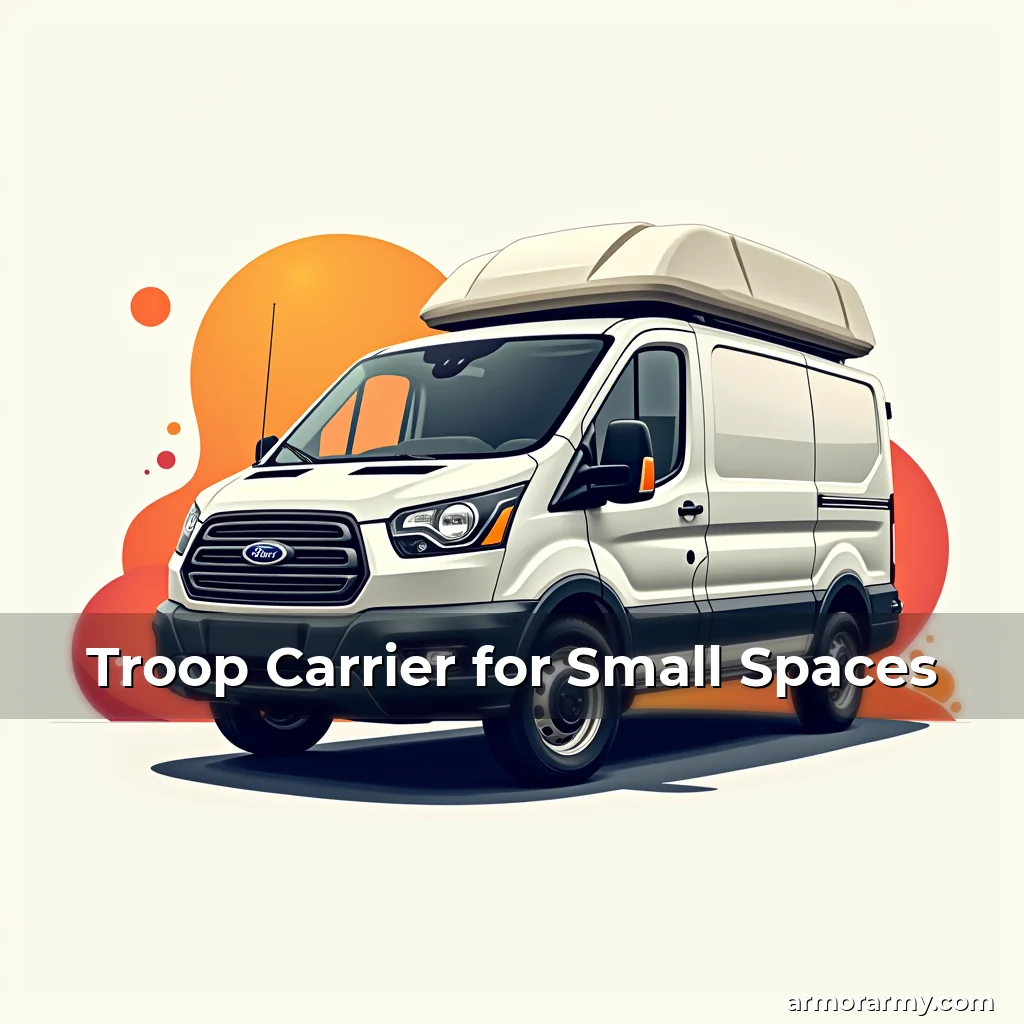
Troop Carrier for Small Spaces
Troop carriers are vital assets in military operations, designed to transport personnel, equipment, and supplies efficiently across varied terrains. These vehicles play a crucial role in ensuring rapid deployment and logistical support for ground forces.
In confined environments such as urban settings, dense forests, or mountainous regions, troop carriers must be adaptable to maintain operational effectiveness. Their design often incorporates features that allow them to navigate narrow roads and tight spaces without compromising safety or functionality.
The Evolution of Troop Carriers
The concept of transporting troops in specialized vehicles dates back to ancient times when chariots were used to carry soldiers into battle. However, modern troop carriers emerged during World War I with the introduction of armored trucks and ambulances adapted for battlefield use.
During World War II, the development of half-tracks revolutionized troop transportation by combining the mobility of wheeled vehicles with the off-road capability of tracked ones. This innovation allowed armies to move units quickly through rough terrain while providing protection against enemy fire.
- WWII Half-Tracks: Offered improved mobility over traditional wagons and early tanks, enabling faster movement across diverse landscapes.
- Airborne Drop Zones: The need for airborne operations led to the creation of gliders and later helicopters capable of inserting troops behind enemy lines with precision.
Design Considerations for Urban Operations
Military planners prioritize compactness and maneuverability when designing troop carriers for urban combat scenarios. Vehicles must fit within city infrastructure constraints while maintaining enough space to deploy infantry effectively.
Urban troop carriers often feature modular interiors that can be reconfigured based on mission requirements. For example, some models include foldable seating arrangements that transform from troop transport mode to cargo-carrying configuration in minutes.
Technological Innovations Enhancing Mobility
Modern troop carriers incorporate advanced suspension systems and low-profile designs to enhance their ability to traverse crowded streets and avoid obstacles. These innovations help reduce vehicle height to prevent damage from overhead hazards like power lines and tree branches.
Sensors and automated navigation systems have also become standard in newer models, allowing drivers to identify potential obstructions before they cause problems. Some carriers even use AI-driven route optimization software to select the most efficient paths through complex urban layouts.
Logistical Advantages of Compact Troop Carriers
Smaller troop carriers offer significant advantages in terms of fuel efficiency and maintenance costs compared to larger counterparts. They require less frequent servicing and consume significantly fewer resources during operation.
These carriers are particularly useful in peacekeeping missions where minimizing environmental impact is essential. Their reduced size allows them to operate discreetly in sensitive areas without drawing unnecessary attention from local populations.
- Fuel Efficiency: Smaller engines and lighter construction contribute to lower fuel consumption rates, making these carriers ideal for prolonged deployments.
- Modular Load Capacity: Many models come equipped with adjustable load compartments that can be expanded or contracted depending on what needs to be transported at any given time.
Training Requirements for Operating Specialized Units
Crews operating compact troop carriers undergo rigorous training programs focused on both technical skills and tactical awareness. This ensures they can handle emergencies ranging from mechanical failures to hostile encounters in unpredictable environments.
Pilots and operators learn how to read digital maps, interpret sensor data, and communicate effectively under pressure. Simulated exercises frequently involve navigating through mock urban landscapes filled with various types of simulated obstacles.
Case Studies: Real-World Applications
The U.S. Army’s M998 HMMWV has been widely deployed in urban warfare situations due to its versatility and adaptability. It has served in conflicts ranging from Afghanistan to Iraq, proving effective in both offensive and defensive roles.
In contrast, Russia’s BTR series has seen extensive use in Eastern European theaters where rugged terrain requires greater durability than conventional wheeled vehicles provide. Its amphibious capabilities make it suitable for river crossings without requiring additional bridging equipment.
- HMMWV Variants: From Humvees modified for medical evacuation to those armed with machine guns or missile launchers, each variant serves different purposes within combined arms doctrine.
- BTR Adaptability: Equipped with turrets featuring remote-controlled weapons systems, these carriers demonstrate high levels of situational awareness and engagement capability when facing asymmetric threats.
Evolving Threats and Future Developments
As insurgent tactics continue evolving, so too does the technology surrounding troop carrier design. Newer models increasingly emphasize stealth characteristics and enhanced surveillance abilities to counter emerging security challenges.
Autonomous driving technologies are being tested extensively in experimental prototypes aimed at reducing human exposure risk during dangerous operations. These autonomous platforms could potentially serve dual roles as reconnaissance tools and transport vessels simultaneously.
- Stealth Features: Incorporation of radar-absorbing materials and thermal camouflage helps minimize detection chances by enemy sensors.
- Surveillance Upgrades: Integration of high-resolution cameras, night vision devices, and real-time data transmission networks improves command visibility during extended engagements.
Community Engagement and Public Perception
Within communities affected by military presence, perceptions regarding troop carriers vary greatly depending on cultural context and historical experiences. Local residents may view these vehicles either positively or negatively based on past interactions with occupying forces.
To mitigate negative sentiments, defense organizations engage in outreach initiatives promoting transparency about military activities involving troop carriers. Educational campaigns highlight the humanitarian aspects of using these vehicles alongside traditional combat functions.
Conclusion
Troop carriers remain indispensable elements in contemporary warfare strategies, especially considering increasing emphasis placed upon rapid response mechanisms and flexible force projection capacities.
By continuously refining designs towards better integration with modern combat doctrines and enhancing public relations efforts globally, militaries ensure sustained relevance and acceptability among civilian populations worldwide.

news is a contributor at ArmorArmy.com. We are committed to providing well-researched, accurate, and valuable content to our readers.