
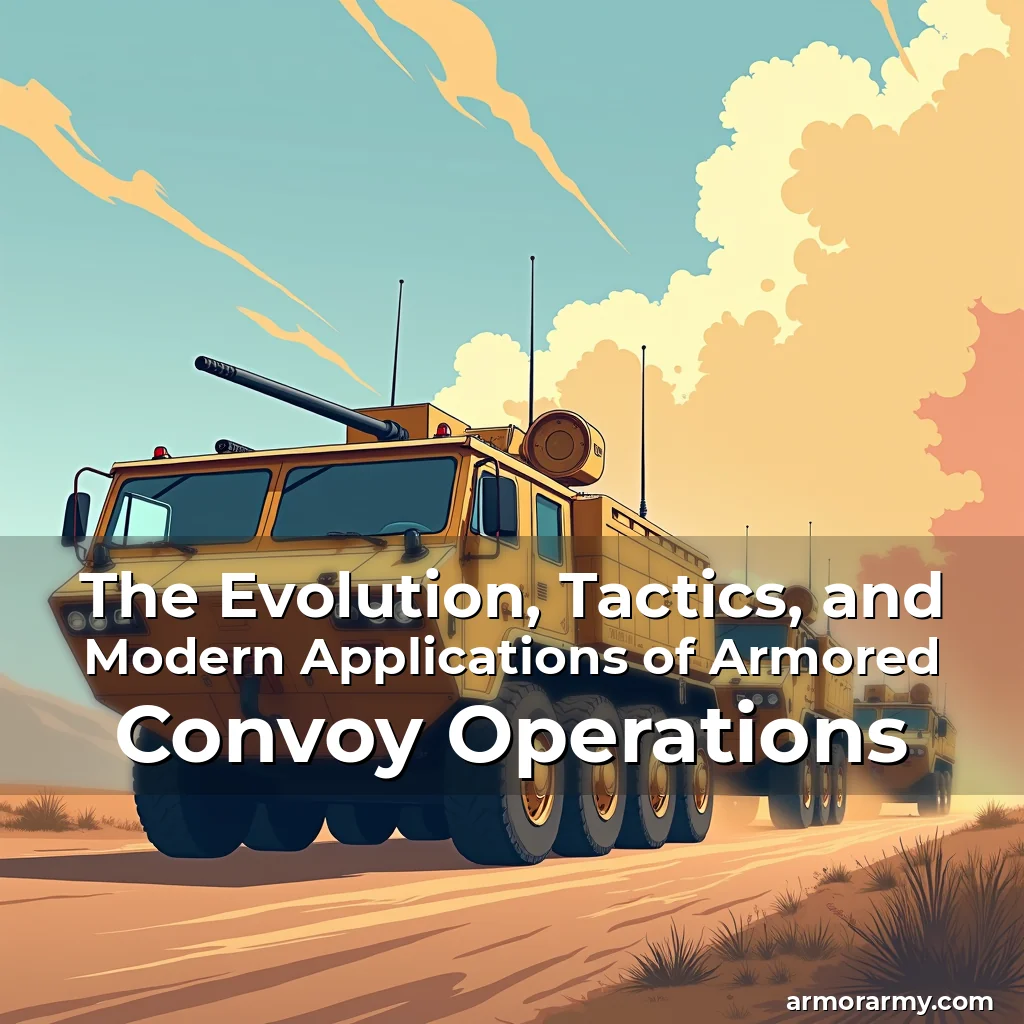
The Evolution, Tactics, and Modern Applications of Armored Convoy Operations
In military history, few strategic maneuvers have been as pivotal—or as perilous—as the deployment of an armored convoy. These heavily protected columns of vehicles serve not only as mobile fortresses but also as lifelines during combat operations, humanitarian missions, and peacekeeping efforts across the globe. From ancient chariot formations to today’s high-tech, GPS-guided convoys, armored convoys remain a cornerstone of modern warfare.
Their significance lies in their ability to transport personnel, supplies, and even heavy weaponry under hostile conditions while minimizing exposure to enemy fire. As such, understanding the intricacies of armored convoy operations is essential for both seasoned veterans and newcomers to the world of military strategy and defense technology.
The Historical Roots of Armored Convoys
The concept of organized troop movements using armored vehicles dates back centuries, though the term “convoy” itself was first used by the British Royal Navy in the 16th century to describe groups of merchant ships sailing together for protection against pirates and privateers. This early form of collective security laid the groundwork for later developments in land-based armored transportation.
During World War I, tanks were introduced, and although they were initially deployed individually rather than in coordinated convoys, the need for better coordination soon became evident. By World War II, entire battalions moved in mechanized units supported by artillery and reconnaissance teams, marking the beginning of true armored convoy tactics.
- Tank Columns: Early examples included German Blitzkrieg strategies where tanks advanced in tight formation to overwhelm enemy defenses quickly.
- Supply Lines: The importance of maintaining supply lines through enemy territory led to the development of convoys carrying fuel, ammunition, and medical supplies.
Modern Military Armored Convoy Composition
Today’s armored convoys are highly specialized and consist of various types of armored vehicles designed for different roles within the operation. These include armored personnel carriers (APCs), which carry troops safely from one location to another; mine-resistant ambush protected (MRAP) vehicles, known for their enhanced protection against roadside bombs; and command posts equipped with communication systems.
Each vehicle plays a crucial role in ensuring mission success. APCs provide mobility and security for soldiers, MRAPs protect against improvised explosive devices (IEDs), and command posts ensure real-time situational awareness and decision-making capabilities among field commanders.
A typical modern armored convoy might involve up to thirty vehicles depending on the mission requirements. For example, a full-scale expeditionary force may require additional support vehicles such as engineers’ trucks, ambulance units, and logistics support trucks alongside standard armored fighting vehicles.
Operational Objectives and Tactical Roles
Armored convoys fulfill several critical objectives based on operational needs. One primary function is to secure rear areas by transporting vital resources without interruption from potential threats. Another key role involves conducting offensive operations when necessary—such as moving forces behind enemy lines or supporting amphibious assaults along coastlines.
Additionally, these convoys often act as mobile bases allowing troops to establish temporary forward operating positions before advancing further inland. Their presence can significantly alter battlefield dynamics by providing rapid reinforcements at crucial moments.
The tactical flexibility offered by armored convoys makes them invaluable assets during prolonged conflicts where traditional fixed installations become vulnerable targets over time. They allow for dynamic responses tailored specifically towards current threat levels faced by frontline units.
Safety Measures and Defensive Technologies
To enhance survivability amidst increasingly sophisticated threats, modern armored convoys employ advanced defensive technologies including active protection systems (APS). These systems detect incoming projectiles mid-flight and intercept them before impact—an innovation that has drastically improved crew safety rates compared to conventional passive armor alone.
In addition to APS, electronic warfare suites play an integral part in protecting convoys against surveillance drones and other forms of remote detection methods employed by adversaries seeking intelligence gathering opportunities. Jamming equipment disrupts signals sent out by enemy sensors making tracking much harder unless direct line-of-sight contact exists.
Furthermore, camouflage netting combined with thermal masking techniques helps reduce visibility against heat signatures picked up by infrared cameras commonly utilized in modern conflict zones. Such measures contribute greatly toward reducing casualties associated with ambush attacks or targeted strikes aimed primarily at disrupting supply chains.
Logistical Challenges Faced During Armored Convoy Missions
Despite technological advancements enhancing overall effectiveness, logistical challenges persist within armored convoy operations. Fuel consumption remains one significant concern since larger numbers of vehicles require substantial quantities of gasoline/diesel regularly replenished either en route via air drops or established refueling stations located strategically ahead along planned routes.
Weather conditions pose another considerable hurdle affecting maneuverability especially in extreme climates ranging from scorching deserts experiencing temperatures exceeding 50°Celsius down cold Arctic environments where engine performance deteriorates rapidly due to freezing temperatures impacting mechanical components adversely.
Road infrastructure quality varies widely across regions meaning some paths suitable solely for light duty vehicles cannot accommodate heavier tracked machines necessitating alternate detours sometimes resulting delays unless alternative roads exist nearby capable handling increased weight loads effectively.
Cultural Impact and Public Perception Surrounding Armored Convoy Deployments
Public perception regarding armored convoy deployments fluctuates considerably depending upon geopolitical contexts surrounding each respective nation involved. In countries actively engaged in warzones involving foreign interventions there tends be greater acceptance albeit tempered caution concerning civilian casualties potentially arising due mishaps occurring around populated areas.
Conversely regions experiencing internal strife often view external military involvement negatively regardless whether intent peaceful mediation purposes because perceived occupation risks overshadow any benefits derived from secured transit corridors facilitating humanitarian aid delivery etcetera.
This duality underscores complex nature international relations particularly how media portrayal influences opinions held globally influencing policy decisions made thereafter concerning future engagements involving similar scenarios requiring use armored convoys once again.
Evolving Threats Requiring Constant Adaptation Within Armored Convoy Strategies
New emerging threats continuously challenge effectiveness traditionally relied upon armored convoy structures prompting ongoing adaptations necessary maintain relevance contemporary battlefields. Amongst most pressing concerns stand proliferation weapons grade explosives readily accessible insurgent groups enabling execution devastating attacks utilizing rudimentary materials combined ingenuity surpassing traditional munitions previously encountered.
Simultaneously cyberwarfare introduces novel vulnerabilities targeting digital networks embedded within communication frameworks governing navigation protocols thereby threatening integrity data exchanged between nodes comprising entire fleet simultaneously undermining coordination efficiency severely hampering response times critical situations demanding immediate action.
These evolving dangers necessitate continuous research investment developing countermeasures addressing multifaceted issues presented above while preserving core functionalities already proven successful past engagements despite changing landscape confronting defenders daily now more than ever before.
Futuristic Innovations Shaping Future Of Armored Convoy Development
Looking ahead innovations currently undergoing testing promise revolutionize aspects related movement protection afforded members participating operations within armored convicts. Autonomous driving technology offers prospect eliminating human error factor altogether through precise control maintained AI algorithms calculating optimal trajectories avoiding obstacles efficiently calculated speed maintaining safe distances others present environment irrespective weather condition encountered.
Moreover integration swarm robotics could lead breakthrough allowing smaller units operate independently yet collaboratively executing tasks collectively surpassing individual capacities achieved separately thus increasing resilience overall system facing unexpected disruptions originating anywhere along extended journey undertaken.
Such futuristic concepts represent exciting possibilities however implementation requires careful consideration ethical implications concerning reliance automation processes entirely removing humans loop entirely something still debated extensively amongst experts weighing pros cons closely before deciding ultimate course adoption.
Conclusion
From its historical origins to cutting-edge applications today, the armored convoy remains a vital element in global military operations. Its evolution reflects broader shifts in warfare doctrine emphasizing mobility agility adaptability essential surviving modern conflict landscapes characterized unpredictability complexity.
As we look toward future endeavors involving armored convoys, continued investment into R&D initiatives focused improving survivability efficiency will determine extent success experienced navigating ever-changing challenges posed adversary nations employing innovative means conduct asymmetric warfare campaigns exploiting weaknesses traditional approaches fail address adequately.