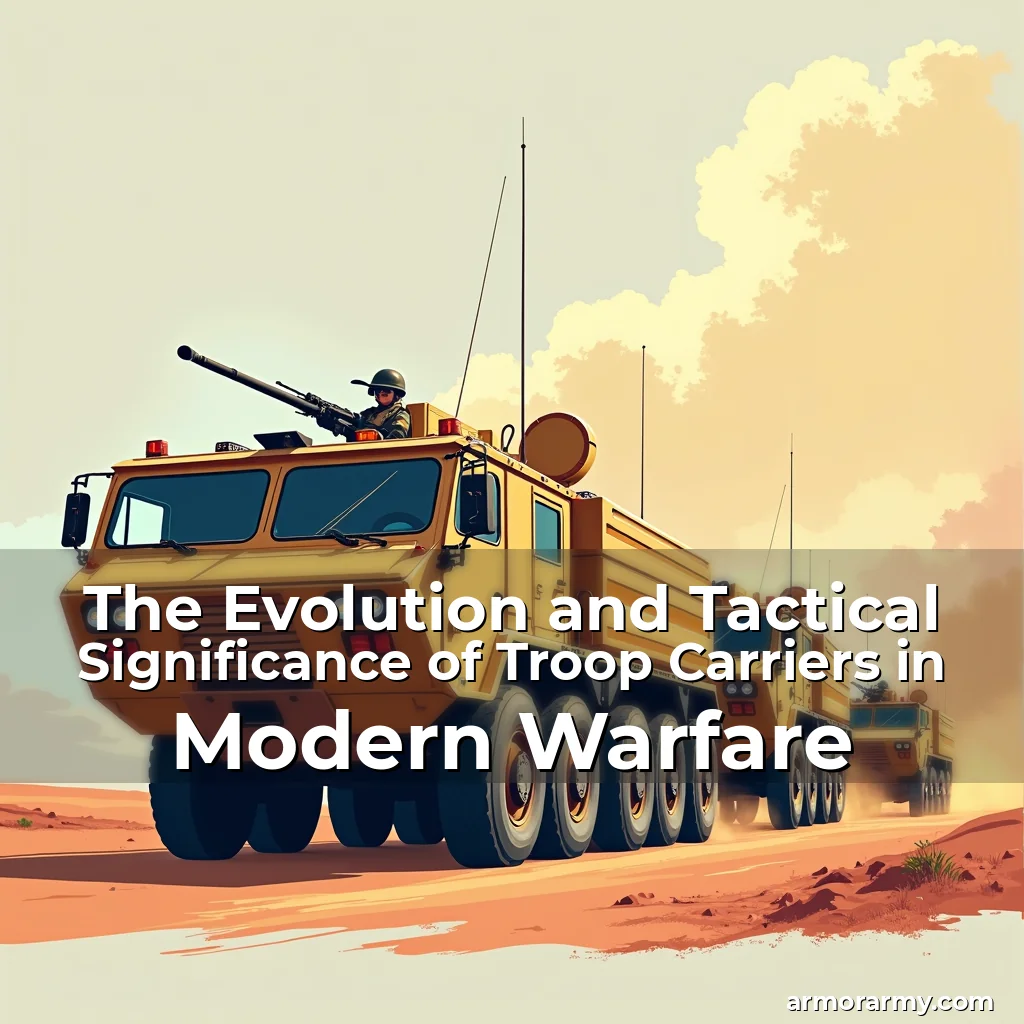
The Evolution and Tactical Significance of Troop Carriers in Modern Warfare
Troop carriers have played an indispensable role in military operations since their inception during World War I. These vehicles are designed specifically for transporting soldiers quickly and efficiently across battlefields, ensuring that troops can reach critical locations without being exposed to enemy fire for extended periods.
In modern warfare, the importance of troop carriers has only grown as conflicts become increasingly complex and technology-driven. From armored personnel carriers to specialized air transports, these vehicles continue to shape the outcome of battles by enhancing mobility, survivability, and operational flexibility.
Historical Development of Troop Carrier Vehicles
The concept of using vehicles to transport troops dates back to ancient times when chariots were used in wars such as those fought by the Romans and Greeks. However, the first true troop carriers emerged during the early 20th century with the advent of automobiles and mechanized transportation.
During World War I, the need for rapid deployment of forces led to the development of rudimentary troop-carrying trucks. These vehicles provided a significant advantage over traditional horse-drawn carriages by enabling faster movement of large numbers of soldiers across front lines.
- World War I Innovations: Early models featured open tops for easy loading and unloading but offered little protection against shelling or small arms fire.
- Interwar Period Improvements: Engineers experimented with adding basic armor plating and improving suspension systems to enhance both durability and comfort for passengers.
The interwar years saw continued refinement of troop carrier designs. Military planners recognized that effective battlefield logistics required not only speed but also resilience against potential threats from enemy action.
New materials and manufacturing techniques allowed for lighter yet stronger vehicle bodies, which improved fuel efficiency while maintaining necessary structural integrity under combat conditions.
Mechanization of Troops During World War II
By the time World War II began, troop carriers had evolved significantly compared to their predecessors. The war necessitated mass mobilizations where entire divisions could be moved rapidly across vast distances within days rather than weeks.
One notable example was the use of half-tracks—vehicles combining wheels and tracks—which proved highly versatile due to their ability to traverse various terrains including mud and snow-covered landscapes common in Europe at that time.
The U.S. Army’s M3 Halftrack became iconic among Allied forces for its reliability and capacity to carry up to ten fully equipped infantrymen alongside their gear and weapons.
Similarly, German forces employed the Sd.Kfz. 251, known for its robust design and capability to transport troops effectively through challenging terrain encountered during campaigns on Eastern Fronts.
Impact of Technological Advancements on Troop Transport
Technological progress during WWII transformed how armies approached logistical challenges associated with moving large numbers of troops safely and swiftly. This period marked a turning point towards full mechanization of ground forces worldwide.
American engineers developed airborne assault tactics supported by gliders capable of delivering paratroopers behind enemy lines—an innovation that dramatically changed strategic options available during engagements.
These developments laid foundational principles still applied today regarding coordination between different types of troop carriers—from land-based APCs (Armored Personnel Carriers) to aerial drops facilitated by specially modified aircraft.
As new technologies emerged post-war era, so did improvements aimed at increasing crew safety features along with enhanced communication capabilities integrated directly into vehicle systems.
Modern Era: Advanced Designs and Capabilities
Post-WWII technological advancements brought forth sophisticated troop carrier designs incorporating advanced composite materials and digital control systems. Contemporary models now feature state-of-the-art electronics suite allowing real-time data exchange crucial for coordinated multi-unit operations.
Modern troop carriers are engineered not merely as transport platforms but as mobile command centers equipped with GPS navigation, thermal imaging cameras, night vision devices, and encrypted communications networks essential for contemporary asymmetric warfare scenarios.
Additionally, many current-generation units include automated weapon stations providing defensive capabilities against light infantry attacks or improvised explosive devices commonly found in urban environments.
This evolution reflects broader shifts within military doctrine emphasizing combined arms approaches wherein all elements work synergistically toward achieving mission objectives efficiently.
Case Study: US Army’s Infantry Fighting Vehicle (IFV)
The IFV represents one pinnacle achievement in modern troop carrier engineering. Designed primarily for direct fire support roles while simultaneously carrying squads into hostile zones, these vehicles combine offensive power with protective attributes never before seen together on similar scale previously.
Equipped with powerful cannons mounted atop turret assemblies, IFVs allow crews inside them to engage targets at considerable range before dismounting once they’ve reached designated objective areas.
Such integration ensures greater survivability rates amongst transported personnel who otherwise would face heightened risks upon exiting vulnerable positions exposed directly to enemy fire.
Furthermore, modular interior configurations enable quick reconfiguration based upon specific needs arising out during particular missions thereby maximizing utility across diverse theaters of operation.
Types of Troop Carriers Across Different Platforms
Troop carriers come in numerous forms depending largely upon intended usage context; however broadly speaking there exist three primary categories namely Land-Based Armoured Personnel Carriers (APCs), Airborne Drop Crafts meant specifically for parachute deployments, and Naval Amphibious Assault Ships facilitating amphibious assaults involving landing craft.
Each category serves distinct purposes aligned closely with geographical constraints imposed by nature itself—be it dense forests requiring high off-road performance characteristics or oceanic expanses demanding stable floating mechanisms suitable even amidst turbulent sea states.
Land-based APCs generally prioritize maneuverability & protection levels whereas naval equivalents focus heavily onto buoyancy concerns plus ease handling during boarding/deboarding processes.
Airborne variants differ substantially too because they must withstand extreme aerodynamic stresses generated during descent phases following parachute opening thus necessitating reinforced structures capable absorbing massive deceleration forces safely.
Variants Within Land-Based Troop Carrier Category
Amongst land-based options, several subtypes emerge according to varying degrees sophistication level achieved via successive generations’ worth upgrades made possible thanks largely due ongoing R&D efforts focused precisely upon optimizing soldier welfare metrics.
Basic versions consist mainly straightforward box-like frames fitted solely with engines sufficient enough powering vehicle forward though lacking any sort external armaments except maybe machine gun ports located strategically around sides top portions thereof.
Mid-level iterations incorporate additional enhancements like smoke grenade launchers positioned near corners aiming assist obscuring visibility whenever evasive maneuvers deemed necessary especially amid ambush situations.
High-end models go further beyond mere passive defense measures offering active countermeasures suites containing radar jammers capable disrupting incoming guided missiles trajectories mid-flight thereby affording precious seconds extra reaction window prior actual impact occurs.
Rapid Deployment Strategies Utilizing Troop Carriers
Rapid deployment strategies rely heavily upon efficient utilization patterns established through extensive pre-planning stages conducted well ahead actual execution date scheduled commencing operations.
Central components involve establishing secure supply chains linking depots situated far away from frontline zones ensuring constant flow fresh ammunition provisions clothing supplies medical kits etc required sustaining prolonged engagements.
Logistics management plays equally vital role here too ensuring timely arrivals promised reinforcements exactly where needed most urgent moments irrespective weather conditions prevailing region involved.
Moreover precise timing matters immensely particularly when coordinating simultaneous strikes launched independently yet synchronized perfectly together creating overwhelming pressure points forcing adversary retreats prematurely.
Operational Examples Demonstrating Effectiveness
During Gulf War 1990-91 coalition forces demonstrated remarkable proficiency executing swift insertions deep inside Iraqi territory utilizing fleets consisting mostly C-130 Hercules transport planes loaded fully armed special operations teams ready strike targets identified via satellite imagery reconnaissance flights undertaken beforehand.
Similarly Operation Enduring Freedom commenced shortly thereafter witnessed extensive employment helicopter borne insertion techniques wherein Apache attack choppers ferried elite units straight onto Taliban strongholds located mountainous regions Afghanistan proving invaluable asset securing key strategic locations quickly without excessive casualties incurred either side.
More recent examples include Syria conflict where Russian Aerospace Forces deployed Pantsir-M防空系统配合使用Mi-8 helicopters conducting surprise raids against ISIS positions showcasing versatility afforded having access diverse fleet compositions adaptable myriad tactical requirements presented dynamic battlefield environment.
Such instances underscore necessity maintaining flexible inventory comprising wide array platform choices each tailored fulfilling unique demands faced ever-changing global security landscape today.
Safety Features Integrated Into Modern Troop Carriers
Ensuring occupant safety remains paramount concern guiding every aspect design process relating modern troop carrier production cycles spanning decades long development timelines dedicated exclusively refining survival probabilities experienced crews operating under intense duress situations encountered regular basis.
Contemporary models boast multiple layers protection starting exterior hull constructed employing lightweight alloys resistant penetration attempts coming directed projectiles fired from standard issue rifles pistols hand grenades thrown close proximity.
Beneath this outer shell resides another layer composed bulletproof fibers woven tightly enough preventing fragmentation pieces caused blast events originating nearby explosions detonated improperly placed ordnance items left lying around abandoned positions formerly occupied hostiles.
Interior compartments benefit similarly from application same principle albeit modified slightly accommodate ergonomics necessities ensuring occupants remain comfortable despite prolonged exposure confined spaces subjected vibrations shaking generated traversing rough terrain conditions frequently endured during actual missions.
Emergency Egress Systems And Their Importance
Critical element contributing overall effectiveness emergency egress system installed virtually every model produced nowadays irrespective whether classified strictly military grade commercial adaptations permitted civilian populations utilize occasionally.
These systems typically consist sliding doors operated electronically controlled panels monitored continuously computerized monitoring network detecting anomalies instantly alerting crew members accordingly initiating sequence unlocking mechanism releasing latches securing entryways automatically.
Some advanced variants integrate automatic door release features triggered upon detection certain threshold values exceeded concerning internal atmospheric changes indicative possible breach occurred external surfaces compromised somehow.
This proactive approach reduces risk getting trapped inside damaged unit unable exit manually thus increasing chances successful evacuation rescue efforts carried out subsequently regardless severity damage sustained.
Economic Considerations In Procurement Decisions
Purchasing decisions surrounding troop carrier acquisitions involve careful evaluation multifaceted financial implications extending beyond initial acquisition costs covering maintenance expenses replacement parts labor charges associated upkeep machinery intricate electronic subsystems embedded within framework structure itself.
Governments seeking procure bulk quantities often leverage economies scale negotiate favorable pricing terms manufacturers willing produce larger batches thereby reducing per unit cost significantly compared smaller order sizes processed separately.
However trade-off exists between upfront investment required acquiring cutting edge technology versus opting cheaper alternatives potentially lacking comparable longevity performance standards expected future years ahead.
Therefore balance struck between immediate budgetary limitations enduring value proposition derived owning superior equipment capable adapting evolving threat profiles anticipated emerging threats horizon.
Lifecycle Cost Analysis For Optimal Investment Returns
To determine best course action regarding procurement strategy lifecycle cost analysis proves instrumental evaluating total expenditure accumulated throughout service life duration assigned particular asset type selected initially.
This method entails projecting cumulative expenditures related repairs refurbishments modernizations conducted periodically spaced intervals determined manufacturer recommendations industry benchmarks established universally accepted practices governing fielded units globally.
For instance newer generation vehicles might require less frequent servicing due incorporation self-diagnostic sensors able detect malfunctions autonomously schedule preventive maintenance actions accordingly minimizing downtime losses incurred delays caused unexpected breakdown incidents occurring randomly.
Conversely older models necessitate regular inspections tune-ups performed manually consuming substantial resources allocated staff trained perform said tasks accurately reliably without compromising mission readiness status maintained consistently throughout tenure ownership.
Training Programs Required To Operate Troop Carriers Safely
Operating modern troop carrier requires rigorous training regimen encompassing theoretical instruction practical hands-on experience mastering controls managing emergencies arising suddenly unpredictable circumstances encountered daily routine duties performed operators regularly.
Trainees undergo intensive classroom sessions covering fundamental mechanics propulsion systems electrical circuits hydraulic actuators etc ensuring comprehension underlying principles governing vehicle functionality enabling troubleshooting issues promptly when arise unexpectedly during missions.
Simulator exercises play integral part curriculum allowing students familiarize themselves virtual replicas actual machines experiencing simulated combat scenarios replicating realistic environmental factors affecting operability performance outcomes critically dependent accurate response times exhibited participants facing stressful situations.
Field drills conducted later phase program test skills acquired previously assessing competency levels determining readiness deploy real-world conditions matching intensity encountered authentic battlefield settings awaiting deployment orders issued higher authorities overseeing operations.
Specialized Roles Within Crew Composition
Effective operation troop carrier depends division responsibilities among crew members assigned specific functions ensuring smooth functioning apparatus while responding appropriately emergent crises threatening stability onboard vessel.
Driver assumes primary responsibility navigating vehicle safely avoiding obstacles adhering traffic regulations applicable jurisdictional boundaries crossed during transit unless engaged active hostilities requiring deviation standard protocols.
Communicator manages radio transmissions relaying information received from other units transmitting updates status position vehicle confirming receipt messages sent outwardly maintaining clear channels uninterrupted communications vital success coordinated operations relying seamless data exchanges between disparate entities.
Medical technician provides first aid treatment injuries sustained accidents occur aboard treating minor wounds stabilizing patients until professional medical assistance arrives assisting evacuations necessary situations escalating beyond capacities onboard personnel alone manage.
Fuel Efficiency And Environmental Impact Of Troop Carriers
Environmental considerations have gained prominence recently prompting militaries reassess energy consumption patterns associated heavy reliance fossil fuels powering large fleets troop carriers responsible emitting greenhouse gases contributing climate change problems plaguing planet currently.
Efforts underway developing alternative propulsion methods including hybrid electric drive systems utilizing regenerative braking technology capturing kinetic energy converting usable electricity stored batteries supplying auxiliary power needs lowering dependency conventional gasoline diesel sources entirely.
Furthermore research focuses biofuels synthesized from renewable organic matter possessing combustion properties equivalent petroleum derivatives thereby decreasing carbon footprint leaving lesser ecological mark compared traditional counterparts.
Adoption these innovations aligns directives international agreements committed reducing emissions pledged nations participating Paris Agreement aiming limit global warming temperatures rising above dangerous thresholds set forth scientific consensus advising urgent mitigation measures implemented soonest possible.
Strategies Implemented Reducing Carbon Footprint
Several initiatives launched aim minimize environmental harm inflicted deploying troop carriers globally scope operations executed routinely under varied climatic conditions impacting local ecosystems differently depending geographical location targeted activities carried out therein.
One strategy involves route optimization algorithms calculating shortest paths considering elevation changes road quality weather forecasts minimizing unnecessary detours prolonging journeys unnecessarily thereby conserving fuel reserves better utilized elsewhere prioritized missions.
Another measure entails retrofitting existing vehicles installing filtration devices removing particulate matter exhaust fumes reducing pollution levels reaching atmosphere mitigating health hazards posed communities residing vicinity operational zones affected regular passage military convoys.
Collaborative projects initiated multinational organizations pooling resources expertise accelerating transition cleaner technologies becoming mainstream replacing outdated inefficient models obsolete rendering incapable meeting present day standards sustainability expectations dictated regulatory frameworks enforced jurisdictions worldwide.
Future Trends Shaping Next Generation Troop Carriers
Ongoing technological breakthroughs promise revolutionizing troop carrier design functionalities surpassing capabilities hitherto considered unimaginable merely few years ago. Emerging fields artificial intelligence robotics quantum computing poised redefine paradigms governing mobility logistics warfare altogether.
Autonomous driving technology already making strides toward implementation battlefield scenarios where AI-controlled vehicles execute routes predetermined parameters eliminating human error inherent manual piloting increasing accuracy precision navigational computations executed milliseconds instead minutes spent deliberating optimal path selections manually.
Integration drones swarms alongside main body troop carriers offers unprecedented surveillance coverage mapping abilities identifying hidden threats invisible naked eye enabling preemptive actions neutralize dangers proactively rather waiting discover damage aftermath occurrence.
Quantum encryption methods safeguarding sensitive communications prevent interception hacking attempts ensuring secure transmission confidential data exchanged between units irrespective distance separating them geographically.
Material Science Advances Enhancing Performance Metrics
Advances material science yield lighter stronger composites exhibiting exceptional resistance ballistic impacts thermal fluctuations mechanical stressors normally degrade conventional steel aluminum alloys traditionally preferred constructing armored vehicles.
Nanostructured ceramics promising breakthroughs providing bulletproof qualities without sacrificing weight advantages enjoyed polymer-based solutions currently popular due reduced burden placed upon chassis supporting load distribution evenly across frame structure.
Self-healing polymers represent another frontier where microcapsules infused resin compounds activate cracks form surface repairing damages spontaneously restoring structural integrity without requiring external intervention repair crews dispatched site assessment repairs necessary.
These innovations collectively contribute toward creation next generation troop carriers embodying perfect blend protection agility endurance demanded modern warfare contexts demanding adaptability responsiveness unparalleled previous eras.
Conclusion
The evolution of troop carriers reflects a continuous pursuit of enhancing military effectiveness through innovation and adaptation. From simple vehicles in WWI to technologically advanced platforms today, these carriers have remained central to the success of military operations worldwide.
Understanding their historical progression, modern capabilities, and future potential is crucial for anyone interested in military history, technology, or strategy. As conflicts evolve, so will the design and function of troop carriers, ensuring they remain vital assets in the ever-changing landscape of warfare.