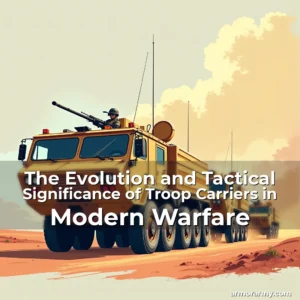
The Troop Carrier: A Pillar of Mobility in Modern Military Operations
Troop carriers have long been an essential component of military logistics, providing critical transport capabilities that enable forces to move swiftly across diverse terrains. These vehicles serve as mobile command centers, transport platforms, and even battlefield shelters, making them indispensable in both conventional warfare and modern counterinsurgency operations.
In contemporary armed conflicts, the role of troop carriers has evolved significantly due to advancements in technology, changing tactical requirements, and increased emphasis on force protection. From armored personnel carriers designed for high-intensity combat environments to light utility vehicles optimized for rapid deployment, these platforms continue to shape how armies conduct operations worldwide.
Historical Evolution of Troop Carriers
The concept of transporting troops in dedicated vehicles dates back centuries, but true development began during World War I when trench warfare necessitated new methods of moving soldiers safely through dangerous zones.
During this period, early iterations such as Ford Model T trucks were adapted for military use, though they lacked specialized features like protective armor or overhead cover. These rudimentary solutions highlighted the need for more robust transportation solutions capable of surviving hostile conditions.
The interwar years saw significant improvements with the introduction of purpose-built designs featuring reinforced bodies and basic fire suppression systems. By the time World War II commenced, several nations had developed standardized models tailored specifically for infantry transport needs.
- Landing Craft Assault (LCA): One notable example from WWII was the LCA used extensively by Allied forces during amphibious landings. These boats could carry up to thirty soldiers while also serving dual roles as supply vessels and evacuation tools.
- M16 Halftrack: Another innovation introduced during WWII included halftracks which combined wheels and tracks for improved mobility over varied terrain types including mud and snow-covered landscapes.
The post-war era witnessed further refinement as Cold War tensions drove technological advancements aimed at enhancing survivability against increasingly sophisticated threats posed by enemy artillery and airpower.
New materials like aluminum alloys enabled lighter yet sturdier constructions without compromising structural integrity, allowing designers greater flexibility in optimizing space utilization within confined interiors.
Modern Design Features and Capabilities
Contemporary troop carriers incorporate advanced engineering principles alongside cutting-edge technologies to ensure optimal performance under various operational scenarios ranging from urban engagements to desert campaigns.
One key feature found in most current models is modular interior configurations that allow quick reconfiguration based on mission requirements—whether carrying fully equipped soldiers ready for immediate action or accommodating medical evacuations requiring additional patient support facilities.
Additionally, many newer variants come equipped with integrated communication suites enabling seamless coordination among units dispersed across wide areas—an absolute necessity given today’s reliance on real-time data exchange during complex multi-domain operations.
Advancements in Armor Protection Systems
Armor protection systems have undergone substantial upgrades since their inception; modern troop carriers now often employ composite armors made from layered combinations of steel plates, ceramics, and other innovative substances engineered to absorb impact energy effectively.
This multi-layered approach not only enhances resistance against ballistic projectiles but also provides better protection against improvised explosive devices (IEDs) commonly encountered in asymmetric warfare contexts.
Some elite models may include active defense mechanisms utilizing sensors linked to reactive装甲 panels that detonate upon detecting incoming threats thereby neutralizing potential damage before it reaches vital components inside the vehicle.
Apart from passive protections, some advanced troop carriers are fitted with NBC (nuclear biological chemical) filtration systems ensuring crew safety even when traversing contaminated regions—an invaluable asset during humanitarian missions or peacekeeping deployments where unexpected hazards might arise.
Variations in Troop Carrier Types
Troop carriers come in numerous forms each designed for distinct purposes reflecting varying strategic priorities across different branches of service and geographic theaters involved in global security challenges.
For instance, armored personnel carriers (APCs) typically prioritize protection offering enhanced survivability compared to wheeled alternatives whereas light reconnaissance vehicles emphasize speed and agility suitable for scouting missions ahead of larger formations.
The choice between tracked versus wheeled platforms depends largely on environmental factors—the former excels off-road capabilities ideal for rugged terrains while latter offers superior fuel efficiency and higher speeds suitable for highway travel.
- Tracked APCs: Examples include the Soviet BMP series known for its ability to navigate difficult terrain efficiently despite relatively modest offensive firepower.
- Wheeled APCs: Western counterparts such as the U.S. M113 armored personnel carrier demonstrate advantages in terms of maintenance simplicity and ease of replacement parts availability crucial for prolonged field operations.
There exists another category comprising hybrid designs blending elements from both categories aiming at achieving balance between maneuverability and durability depending upon projected usage scenarios.
Certain specialized variants cater exclusively towards logistical functions focusing heavily on cargo capacity rather than direct combat engagement although they still retain minimal defensive measures sufficient enough deterrence against low-level threats likely encountered along supply routes.
Rapid Deployment and Strategic Flexibility
The ability to rapidly deploy troops via airborne means represents one aspect where troop carriers play pivotal roles particularly during crisis response situations demanding swift intervention capabilities.
Paratrooper versions modified specifically for aerial insertion often possess reinforced structures capable of withstanding hard landings associated with parachute drops—a critical consideration ensuring occupant safety amidst unpredictable descent patterns typical of such operations.
These aircraft-ready models integrate specialized landing gear configurations coupled with internal harness systems facilitating secure fastening procedures prior to ejection moments minimizing risk exposure inherent in jump activities.
Furthermore, certain experimental programs explore possibilities involving vertical takeoff/landing (VTOL) vehicles potentially revolutionizing future paradigms related to expeditionary warfare logistics support frameworks.
Urban Warfare Adaptations
As cities become increasingly contested arenas for conflict resolution efforts, adapting troop carriers accordingly becomes imperative given unique constraints imposed by dense infrastructures limiting traditional movement options available elsewhere.
Design modifications aim at improving obstacle clearance heights necessary for navigating narrow alleys blocked by debris or makeshift barricades erected deliberately by adversaries seeking impede progress.
Sensors suite enhancements facilitate situational awareness within complex environments enabling operators identify potential ambush sites proactively thus reducing vulnerability levels faced during ingress phases into hostiles territories.
In addition, stealth characteristics incorporated through radar-absorbing coatings help mitigate detection chances significantly increasing element of surprise integral successful execution urban assault plans.
Logistical Support Networks and Maintenance Protocols
Ensuring continuous operability of deployed troop carriers demands well-established logistical infrastructure encompassing maintenance depots strategically positioned near forward operating bases as well as extensive spare part inventories readily accessible whenever breakdown occurs unexpectedly.
Periodic inspections follow rigorous schedules mandated by manufacturers’ guidelines emphasizing preventive maintenance practices aimed at preemptively identifying wear-and-tear issues potentially leading catastrophic failures later down line otherwise left unaddressed.
Training programs routinely update personnel regarding latest diagnostic techniques leveraging digital twins simulations replicating actual mechanical subsystem behaviors allowing technicians troubleshoot problems virtually before physically inspecting hardware itself.
Furthermore, predictive analytics algorithms analyze historical failure trends cross-referencing sensor readings collected continuously throughout operational cycles assisting planners allocate resources judiciously prioritizing highest-risk components requiring attention first.
International Collaborations Enhancing Interoperability
To enhance interoperability amongst allied forces engaged joint exercises or coalition operations, international collaborations foster standardization initiatives promoting commonality across disparate national platforms reducing confusion arising compatibility differences previously hampered effectiveness unified commands.
Standardized interfaces adopted universally streamline integration processes involving external equipment attachments like anti-tank guided missiles launchers mounted externally onto compatible chassis frames eliminating custom adaptation requirements cumbersome manual retrofitting approaches formerly employed.
Such harmonizations extend beyond mere physical dimensions also incorporating software protocols governing data transmission rates ensuring consistent flow information regardless originating source facilitating coordinated decision-making scenarios unfolding dynamically evolving battlefields.
Through shared research ventures pooling expertise global defense communities achieve breakthrough innovations accelerating adoption timelines emerging technologies beneficial entire spectrum users—from frontline troopers relying daily sustenance these machines right up senior strategists orchestrating grand strategies spanning continents.
Evolving Threat Landscape and Future Developments
The persistent evolution of threat vectors necessitates continual reassessment of existing troop carrier architectures prompting exploration novel design philosophies geared toward addressing emerging vulnerabilities exploitable adversaries wielding state-of-the-art weaponry capabilities.
Autonomous driving technologies currently undergoing testing phase envision eventual transition toward semi-autonomous operation modes wherein AI-assisted navigation reduces workload burdens drivers concentrating instead monitoring surroundings reacting unforeseen developments requiring human judgment discretion.
Electric propulsion systems represent another frontier being explored primarily driven sustainability concerns alongside desire minimize acoustic signatures detectable electronic warfare assets prevalent modern arsenals.
Moreover, swarm intelligence applications investigate possibilities deploying fleets self-directed drones augmenting ground-based assets performing recon tasks simultaneously expanding area coverage exponentially surpassing single-unit limitations conventional surveillance methods traditionally relied upon.
Human-Machine Interface Innovations
Integrating intuitive user interfaces facilitates seamless interaction between operator controls and onboard computer systems managing multifaceted functionalities spanning everything from route optimization algorithms calculating shortest viable paths avoiding known danger zones identified satellite imagery feeds.
Haptic feedback mechanisms provide tactile sensations guiding users through menu selections simplifying access critical controls crucial emergency situations where visual distractions pose impediments effective multitasking.
Voice recognition systems further augment accessibility allowing verbal commands issue hands-free initiating desired actions precisely when required—particularly advantageous stressful environments impairing fine motor skills due adrenaline surges experienced intense combat scenarios.
Biometric authentication layers add security preventing unauthorized access sensitive compartments containing classified material restricting entry solely individuals possessing verified credentials established beforehand biometric scanners verifying identity instantly.
Operational Case Studies Highlighting Effectiveness
An illustrative case study involves NATO’s Operation Enduring Freedom highlighting how troop carriers facilitated sustained presence Afghanistan maintaining pressure Taliban forces throughout duration campaign.
During initial stages, conventional APCs proved instrumental securing key locations establishing footholds subsequent expansion operations. Their modular nature allowed conversion ambulance units treating casualties promptly thereby reducing mortality figures attributable delayed medical interventions.
Later transitions toward more resilient configurations reflected lessons learned regarding IED prevalence roadside bombs posing grave risks unarmored segments exposed exterior surfaces vulnerable detonation shockwaves capable disabling vehicles outright causing fatalities occupants trapped inside.
Adaptations implemented included adding spaced armor plating dispersing blast energy diminishing structural damage incurred impacts ensuring continued functionality post-engagement permitting resumption duties without delay.
Lessons Learned from Urban Combat Scenarios
Experiences gleaned from city fighting instances underscored importance adaptability modifying troop carrier attributes accommodate confined spaces challenging maneuverability typical densely populated regions.
Lower-profile exteriors developed subsequently mitigated visibility exposure enemies scanning rooftops searching targets loitering within buildings hoping exploit blind spots created protruding features conventional models presented.
Integrated thermal imaging cameras became commonplace supplementing night vision goggles equipping crews discern heat signatures obscured darkness distinguishing friendlies foes accurately critical close-quarters encounters.
Ultimately, these refinements translated improved success rates clearing objectives while minimizing collateral damages unintended civilian harm inadvertently caused misidentification friendly forces mistaken hostile entities amid chaotic urban battlegrounds.
Environmental Considerations and Sustainability Efforts
With growing emphasis placed ecological footprints militaries worldwide strive reconcile operational necessities with responsible stewardship natural resources through implementing sustainable practices wherever feasible within troop carrier development lifecycle management framework.
Efforts include transitioning diesel engines cleaner alternatives like hybrid-electric powertrains substantially lowering emissions contributing climate change mitigation goals pursued globally irrespective geopolitical affiliations individual countries.
Recycling initiatives target recovery recyclable components decommissioned vehicles diverting waste streams landfill sites preserving finite raw materials essential manufacturing new equipment meeting burgeoning demand expanding operational horizons future endeavors.
Water conservation measures embedded within onboard sanitation systems promote reuse purification processes minimizing freshwater consumption especially pertinent arid climates where scarcity poses acute challenge sustaining life-supporting amenities aboard extended deployments away home bases.
Green Technologies Integration
Pioneering projects test solar panel installations atop roofs generating supplementary electricity powering auxiliary systems reducing dependency fossil fuels thereby decreasing overall carbon output footprint attributable fleet operations.
Biofuels derived plant-based sources emerge promising substitutes petroleum products exhibiting comparable combustion efficiencies albeit requiring adjustments engine tuning parameters optimize performance maintain reliability standards expected military-grade machinery endure harsh conditions without compromise.
Smart grid implementations distribute electrical load intelligently balancing consumption patterns fluctuating demands ensuring uninterrupted service delivery core functionalities unaffected intermittent variations renewable energy generation capacities influenced weather variables affecting sunlight availability wind patterns affecting turbine rotations.
These eco-conscious adaptations align broader organizational commitments planetary health fostering positive relationships local populations residing vicinity training grounds conducting exercises demonstrating commitment preservation ecosystems coexisting alongside fulfilling duty protecting national interests.
Training Programs and Crew Proficiency Development
Effective utilization troop carriers hinges upon thorough training regimens instilling proficiency skills necessary operate handle complex apparatuses proficiently responding contingencies demanding split-second decisions saving lives preventing escalation dangerous situations.
Simulator-based instruction immerses trainees virtual replicas authentic environments replicating real-world challenges encountered actual missions thereby honing reflexes sharpening instincts crucial executing precise maneuvers under pressure without risking physical harm premature stages skill acquisition process.
Scenario drills conducted live settings simulate tactical dilemmas requiring team coordination clear communication channels ensuring synchronized responses aligned collective objectives successfully accomplishing assigned tasks timely manner.
Ongoing refresher courses refresh knowledge advancing technologies periodically introduced market keeping personnel abreast latest innovations ensuring readiness face evolving landscape continually shifting threats imperatives.
Specialized Roles Within Crew Composition
Crew composition varies according to specific model type mission profile designated roles assigned optimizing resource allocation maximizing productivity outcomes achieved collaborative effort members working synergistically towards singular goal accomplishment specified objective.
Drivers must master intricate control mechanisms steering through treacherous terrain maintaining stability amidst turbulence encountering rough patches roadways requiring deft handling precision timing throttle adjustments suspensions calibrated exacting standards guaranteeing smooth rides passengers experiencing minimal discomfort enduring bumpy rides unavoidable circumstances.
Gunnery specialists undergo intensive marksmanship training mastering weapon systems mounted exterior positions understanding ballistics trajectories computing lead times compensating environmental factors influencing accuracy effectiveness shots fired decisively neutralize threats emerging suddenly without warning.
Medical staff receive paramedic certifications preparing treat injuries inflicted combat incidents swiftly stabilizing victims until professional medical assistance arrives hospitals evacuation helicopters dispatched conveying critically wounded patients receiving definitive care expediting recovery periods restoring full health states functional abilities.
Cost-Benefit Analysis and Acquisition Strategies
Evaluating financial implications acquiring deploying troop carriers entails weighing upfront investment costs long-term operational expenditures factoring obsolescence curves forecasting future replacement cycles determining return-on-investment metrics assessing whether expenditure justified benefits yielded throughout lifespan equipment utilized.
Initial procurement prices vary widely dependent manufacturer country origin technological sophistication level incorporated bespoke modifications requested buyers tailoring specifications meet unique operational requirements peculiarities particular theater engagement envisioned.
However, lifecycle costing methodology reveals hidden expenses maintenance repairs consumables replacements accessories necessitating budget allocations exceeding original purchase amounts significantly over time spans extending decades service life expectancies.
Strategic partnerships forged industry leaders facilitate cost-sharing arrangements spreading economic burden across stakeholders pooling resources accelerating R&D timelines bringing next-generation prototypes fruition faster rate benefiting end-users enjoying advanced capabilities sooner than otherwise possible isolated efforts single entity attempting develop independently.
Public Perception and Media Influence
Media portrayal troop carriers influences public perception shaping narratives surrounding military actions either bolstering support legitimizing interventions alternatively inciting controversy igniting debates ethics morality justification force applied foreign lands.
Dramatized depictions cinematic productions sometimes exaggerate capabilities unrealistic expectations cultivated audiences unfamiliar technical intricacies underlying complexities governing actual performances observed frontline scenarios.
Conversely, documentaries presenting factual accounts educate populace dispel misconceptions enlighten viewers realities confronting service members daily enhancing empathy appreciation sacrifices made safeguarding freedoms enjoyed society at large.
Transparency efforts undertaken governments agencies publish reports detailing expenditures allocated troop carrier acquisitions rationale behind decisions reinforcing accountability strengthening trust cultivating informed citizenry capable forming reasoned opinions matters national defense policies.
Conclusion
Troop carriers remain foundational pillars modern military doctrine underscoring significance mobility versatility adaptability demanded dynamic combat environments constantly evolving threat landscapes.
From humble beginnings World War I mechanized transports transformed indispensable assets ensuring safe efficient relocation personnel supplies crucial maintaining momentum victories preserving morale cohesion within ranks throughout history.
Continual innovation propelling advancements fields engineering materials science electronics propels ever-evolving arsenal military toolkit empowering forces prevail adversity uphold security interests present generations inherit future ones.
Understanding nuanced aspects troop carrier development application enhances comprehension broader military operations affirms value investing resources refining these vital instruments ensuring preparedness whatever challenges await horizon.
“`<|End of input|>
Troop carriers have long been an essential component of military logistics, providing critical transport capabilities that enable forces to move swiftly across diverse terrains. These vehicles serve as mobile command centers, transport platforms, and even battlefield shelters, making them indispensable in both conventional warfare and modern counterinsurgency operations. In contemporary armed conflicts, the role of troop carriers has evolved significantly due to advancements in technology, changing tactical requirements, and increased emphasis on force protection. From armored personnel carriers designed for high-intensity combat environments to light utility vehicles optimized for rapid deployment, these platforms continue to shape how armies conduct operations worldwide. The concept of transporting troops in dedicated vehicles dates back centuries, but true development began during World War I when trench warfare necessitated new methods of moving soldiers safely through dangerous zones. During this period, early iterations such as Ford Model T trucks were adapted for military use, though they lacked specialized features like protective armor or overhead cover. These rudimentary solutions highlighted the need for more robust transportation solutions capable of surviving hostile conditions. The interwar years saw significant improvements with the introduction of purpose-built designs featuring reinforced bodies and basic fire suppression systems. By the time World War II commenced, several nations had developed standardized models tailored specifically for infantry transport needs. The post-war era witnessed further refinement as Cold War tensions drove technological advancements aimed at enhancing survivability against increasingly sophisticated threats posed by enemy artillery and airpower. New materials like aluminum alloys enabled lighter yet sturdier constructions without compromising structural integrity, allowing designers greater flexibility in optimizing space utilization within confined interiors. Contemporary troop carriers incorporate advanced engineering principles alongside cutting-edge technologies to ensure optimal performance under various operational scenarios ranging from urban engagements to desert campaigns. One key feature found in most current models is modular interior configurations that allow quick reconfiguration based on mission requirements—whether carrying fully equipped soldiers ready for immediate action or accommodating medical evacuations requiring additional patient support facilities. Additionally, many newer variants come equipped with integrated communication suites enabling seamless coordination among units dispersed across wide areas—an absolute necessity given today’s reliance on real-time data exchange during complex multi-domain operations. Armor protection systems have undergone substantial upgrades since their inception; modern troop carriers now often employ composite armors made from layered combinations of steel plates, ceramics, and other innovative substances engineered to absorb impact energy effectively. This multi-layered approach not only enhances resistance against ballistic projectiles but also provides better protection against improvised explosive devices (IEDs) commonly encountered in asymmetric warfare contexts. Some elite models may include active defense mechanisms utilizing sensors linked to reactive armor panels that detonate upon detecting incoming threats thereby neutralizing potential damage before it reaches vital components inside the vehicle. Apart from passive protections, some advanced troop carriers are fitted with NBC (nuclear biological chemical) filtration systems ensuring crew safety even when traversing contaminated regions—an invaluable asset during humanitarian missions or peacekeeping deployments where unexpected hazards might arise. Troop carriers come in numerous forms each designed for distinct purposes reflecting varying strategic priorities across different branches of service and geographic theaters involved in global security challenges. For instance, armored personnel carriers (APCs) typically prioritize protection offering enhanced survivability compared to wheeled alternatives whereas light reconnaissance vehicles emphasize speed and agility suitable for scouting missions ahead of larger formations. The choice between tracked versus wheeled platforms depends largely on environmental factors—the former excels off-road capabilities ideal for rugged terrains while latter offers superior fuel efficiency and higher speeds suitable for highway travel. There exists another category comprising hybrid designs blending elements from both categories aiming at achieving balance between maneuverability and durability depending upon projected usage scenarios. Certain specialized variants cater exclusively towards logistical functions focusing heavily on cargo capacity rather than direct combat engagement although they still retain minimal defensive measures sufficient enough deterrence against low-level threats likely encountered along supply routes. The ability to rapidly deploy troops via airborne means represents one aspect where troop carriers play pivotal roles particularly during crisis response situations demanding swift intervention capabilities. Paratrooper versions modified specifically for aerial insertion often possess reinforced structures capable of withstanding hard landings associated with parachute drops—a critical consideration ensuring occupant safety amidst unpredictable descent patterns typical of such operations. These aircraft-ready models integrate specialized landing gear configurations coupled with internal harness systems facilitating secure fastening procedures prior to ejection moments minimizing risk exposure inherent in jump activities. Furthermore, certain experimental programs explore possibilities involving vertical takeoff/landing (VTOL) vehicles potentially revolutionizing future paradigms related to expeditionary warfare logistics support frameworks. As cities become increasingly contested arenas for conflict resolution efforts, adapting troop carriers accordingly becomes imperative given unique constraints imposed by dense infrastructures limiting traditional movement options available elsewhere. Design modifications aim at improving obstacle clearance heights necessary for navigating narrow alleys blocked by debris or makeshift barricades erected deliberately by adversaries seeking to impede progress. Sensors suite enhancements facilitate situational awareness within complex environments enabling operators identify potential ambush sites proactively thus reducing vulnerability levels faced during ingress phases into hostile territories. In addition, stealth characteristics incorporated through radar-absorbing coatings help mitigate detection chances significantly increasing element of surprise integralThe Troop Carrier: A Pillar of Mobility in Modern Military Operations
Historical Evolution of Troop Carriers
Modern Design Features and Capabilities
Advancements in Armor Protection Systems
Variations in Troop Carrier Types
Rapid Deployment and Strategic Flexibility
Urban Warfare Adaptations