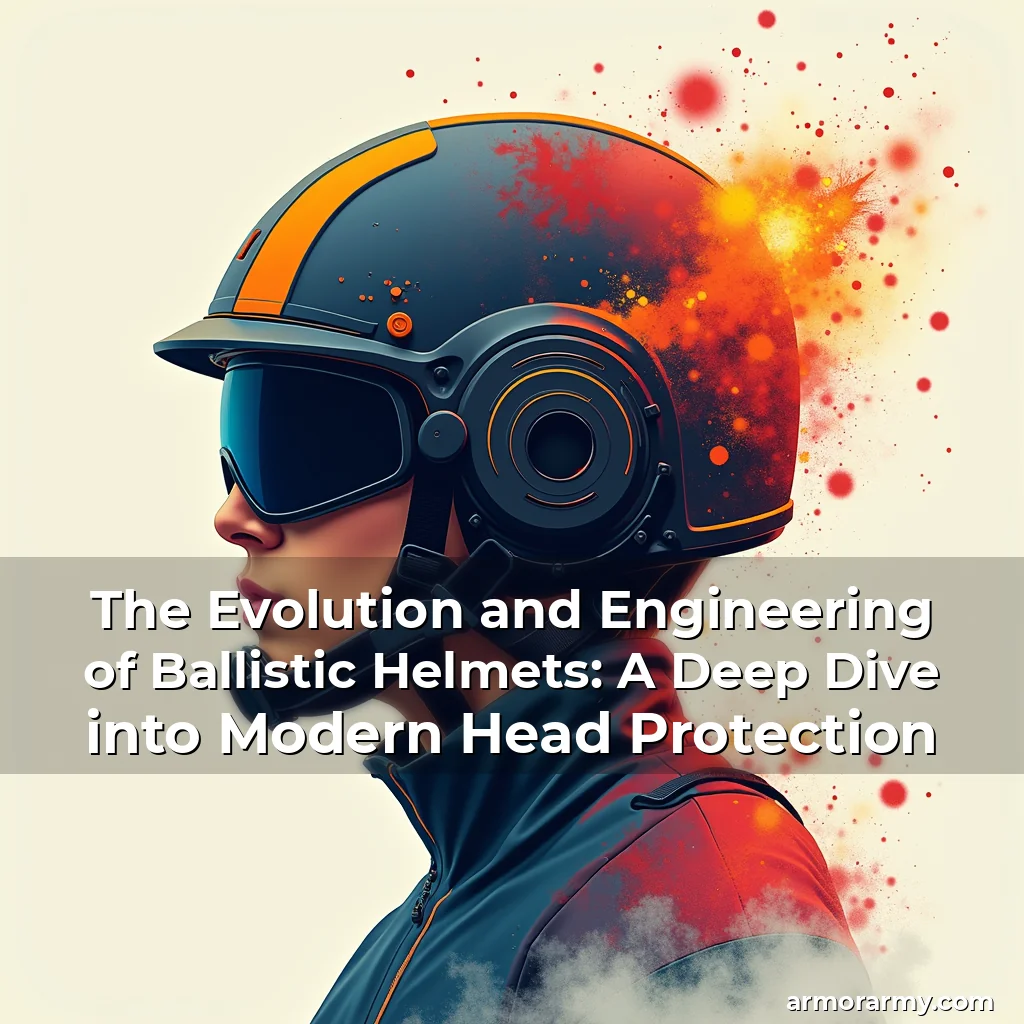
The Evolution and Engineering of Ballistic Helmets: A Deep Dive into Modern Head Protection
In an era where personal safety is paramount, ballistic helmets have become indispensable gear for military personnel, law enforcement officers, and even civilians facing high-risk environments. These advanced headgear solutions are designed not only to protect against conventional threats but also to withstand modern ballistic challenges posed by evolving weaponry.
From the early days of simple steel caps to today’s state-of-the-art composite materials, the development of ballistic helmets has been driven by technological innovation and real-world combat experiences. This article explores the history, construction, testing protocols, applications, and future advancements that define these critical pieces of protective equipment.
The Historical Development of Ballistic Helmets
The concept of protecting the human skull from impact dates back thousands of years. Ancient civilizations used leather, bronze, and iron to craft rudimentary helmets that offered limited protection during warfare and hunting activities. However, these primitive designs lacked the sophistication required to defend against modern projectiles.
During World War I, the introduction of fragmentation bombs and shrapnel necessitated improved head protection. Soldiers began wearing steel helmets, such as the iconic Brodie helmet, which provided some level of defense against falling debris. Yet, they were still vulnerable to direct bullet impacts.
World War II marked a turning point with the development of the M1 helmet, which featured a thicker shell made from manganese steel. This design significantly enhanced resistance to both shrapnel and low-velocity bullets. Nevertheless, it remained insufficient when faced with high-powered firearms.
The Vietnam War saw the emergence of more sophisticated ballistic helmets, including the PASGT (Personnel Armor System for Ground Troops) helmet. Made from Kevlar, this model introduced a new standard for lightweight yet durable protection against rifle rounds and fragments.
- Era-specific innovations: From ancient metals to modern composites, each historical period brought distinct materials and designs tailored to contemporary threats.
- Military necessity: The evolution was largely driven by battlefield demands rather than civilian needs, leading to specialized developments over time.
Modern Materials Used in Ballistic Helmet Construction
Today’s ballistic helmets utilize cutting-edge materials engineered for optimal performance under extreme conditions. Advanced polymer-based composites form the core structure, offering superior strength-to-weight ratios compared to traditional metal alloys.
Kevlar remains one of the most widely employed materials due to its exceptional tensile strength and flexibility. When woven into layers, it can effectively absorb and disperse energy from incoming projectiles without compromising mobility.
Ceramic plates, typically composed of silicon carbide or boron carbide, provide additional stopping power against high-velocity threats. These hard ceramic elements work in conjunction with underlying fabric layers to neutralize kinetic energy efficiently.
Recent advancements include hybrid systems combining aramid fibers with ultra-high-molecular-weight polyethylene (UHMWPE). Such combinations enhance durability while maintaining a relatively light weight profile essential for prolonged wearability.
Ballistic Rating Systems and Standards
To ensure consistent quality and effectiveness across different manufacturers, standardized rating systems govern the classification of ballistic helmets. These ratings specify how well a given helmet performs against various types of ammunition at specified distances.
The National Institute of Justice (NIJ) sets U.S.-based standards through its NIJ Standard-0108.01, categorizing helmets based on their ability to stop handgun bullets versus rifle cartridges. Categories range from Level IIA (lightest protection) up to Level IV (highest level of threat mitigation).
Internationally recognized standards like EN 1063 complement domestic regulations by establishing European benchmarks for helmet performance. Both frameworks emphasize rigorous testing procedures involving live fire tests using certified projectile loads.
Testing involves firing designated calibers at precise angles onto representative samples. Successful candidates must demonstrate sufficient deformation tolerance without penetration or catastrophic failure scenarios.
These certification processes guarantee users receive reliable gear capable of withstanding known threats within defined parameters.
Design Features Enhancing Comfort and Functionality
Beyond raw protection capabilities, modern ballistic helmets incorporate numerous ergonomic features aimed at improving user comfort and operational efficiency. Adjustable suspension systems allow customization according to individual head sizes ensuring secure fitment without excessive pressure points.
Ventilation mechanisms play crucial roles in managing heat buildup inside enclosed spaces. Strategically placed air channels facilitate airflow circulation reducing sweat accumulation and minimizing discomfort during extended use periods.
Modular attachment points enable integration of supplementary accessories such as night vision goggles, communication devices, and tactical lighting units. This adaptability enhances situational awareness and mission readiness levels among field operatives.
Some models feature integrated hearing protection components alongside built-in ear muffs or noise-canceling inserts. These additions help maintain auditory perception while mitigating potential damage from loud explosions or gunfire events.
Applications Across Different User Groups
Ballistic helmets serve diverse purposes depending upon who wears them. Military forces rely heavily on fully rated helmets equipped with full coverage visors and cheek guards providing comprehensive facial protection along with cranial shielding.
Law enforcement agencies often opt for lighter variants suitable for riot control operations. These versions may lack certain enhancements found in military-grade counterparts but prioritize agility factors necessary for close-quarters engagements.
Civilian markets cater primarily towards individuals involved in high-risk professions such as armored vehicle drivers, security consultants, and private investigators operating near conflict zones. Specialized variants exist featuring reinforced neck collars or extended coverage areas.
Emergency responders require helmets meeting specific industry certifications ensuring compatibility with other PPE items worn simultaneously during rescue missions. Firefighters might choose flame-resistant options whereas paramedics need clear visibility fields maintained via transparent face shields.
Emerging Technologies Shaping Future Designs
Ongoing research continues pushing boundaries regarding what constitutes effective head protection. Innovations focused around smart textiles integrate sensors monitoring vital signs or detecting impacts instantaneously alerting nearby teammates if injury occurs.
Nanotechnology holds promise for creating self-healing surfaces capable of repairing minor abrasions automatically thus extending product lifespan considerably before replacement becomes necessary.
Advancements in additive manufacturing techniques permit customized molding directly from digital scans resulting in bespoke fittings optimized specifically for wearer physiology thereby maximizing comfort without sacrificing structural integrity.
Predictive analytics tools analyze usage patterns enabling proactive maintenance schedules preventing unexpected failures due to wear-and-tear issues accumulating unnoticed until too late.
Environmental Considerations and Sustainability Efforts
As global consciousness shifts toward environmental stewardship, manufacturers increasingly consider sustainability aspects throughout production cycles. Eco-friendly initiatives involve sourcing recycled polymers whenever feasible without compromising functional requirements set forth by regulatory bodies.
End-of-life recycling programs encourage responsible disposal practices wherein decommissioned helmets get repurposed instead of ending up in landfills contributing unnecessarily to plastic waste problems plaguing urban centers worldwide.
Sustainable packaging strategies reduce carbon footprints associated with transporting goods long distances across international supply chains by utilizing biodegradable containers wherever applicable without affecting product freshness or shelf life expectancy.
Future directions suggest exploring bioengineered alternatives derived naturally occurring substances potentially replacing synthetic compounds currently dominating market shares despite higher initial costs justified through longer service lives achieved through biological resilience properties inherent within organic matrices.
Training and Maintenance Protocols for Optimal Performance
Proper training ensures operators understand correct donning/doffing procedures essential for quick deployment situations encountered regularly amidst dynamic combat theatres. Regular drills reinforce muscle memory aiding reflex actions crucial during surprise attacks requiring immediate response times measured in fractions of seconds.
Maintenance routines include periodic inspections checking for cracks, frayed edges, or degraded fastening mechanisms which could compromise overall reliability especially after repeated exposure cycles involving extreme temperatures fluctuations between freezing winters and scorching summers.
Recommended cleaning methods vary slightly depending upon manufacturer guidelines although general consensus supports gentle wiping motions avoiding abrasive scrubbing agents likely damaging delicate surface coatings applied initially to enhance UV resistance characteristics vital outdoors operations frequently exposed sunlight radiation.
Lubrication intervals depend upon frequency of use; however excessive oil application discouraged since moisture retention encourages microbial growth accelerating deterioration rates beyond acceptable limits established by industry norms governing safe working condition thresholds.
Conclusion
Ballistic helmets represent remarkable achievements blending science fiction aspirations with practical engineering realities delivering tangible benefits enhancing survival probabilities across varied occupational sectors facing hostile environments daily.
Continued investment into R&D efforts promises further improvements addressing current limitations while embracing emerging technologies poised revolutionize existing paradigms redefining expectations concerning what constitutes adequate personal protective measures safeguarding lives against unpredictable dangers lurking everywhere modern society encounters.