Ballistic Helmet vs Alternatives: Complete Comparison
The choice between a ballistic helmet and alternative head protection solutions represents a critical decision for individuals operating in high-risk environments. Whether you’re a soldier, law enforcement officer, or civilian seeking enhanced security, understanding the differences in design, functionality, and effectiveness across various helmet types is essential.
In today’s world of evolving threats and technological advances, selecting the appropriate form of head protection isn’t merely about aesthetics or comfort—it’s about survival. This comprehensive analysis explores how ballistic helmets compare to conventional options through objective evaluation of features, materials, and practical applications.
Understanding Ballistic Helmets: Definition and Core Features
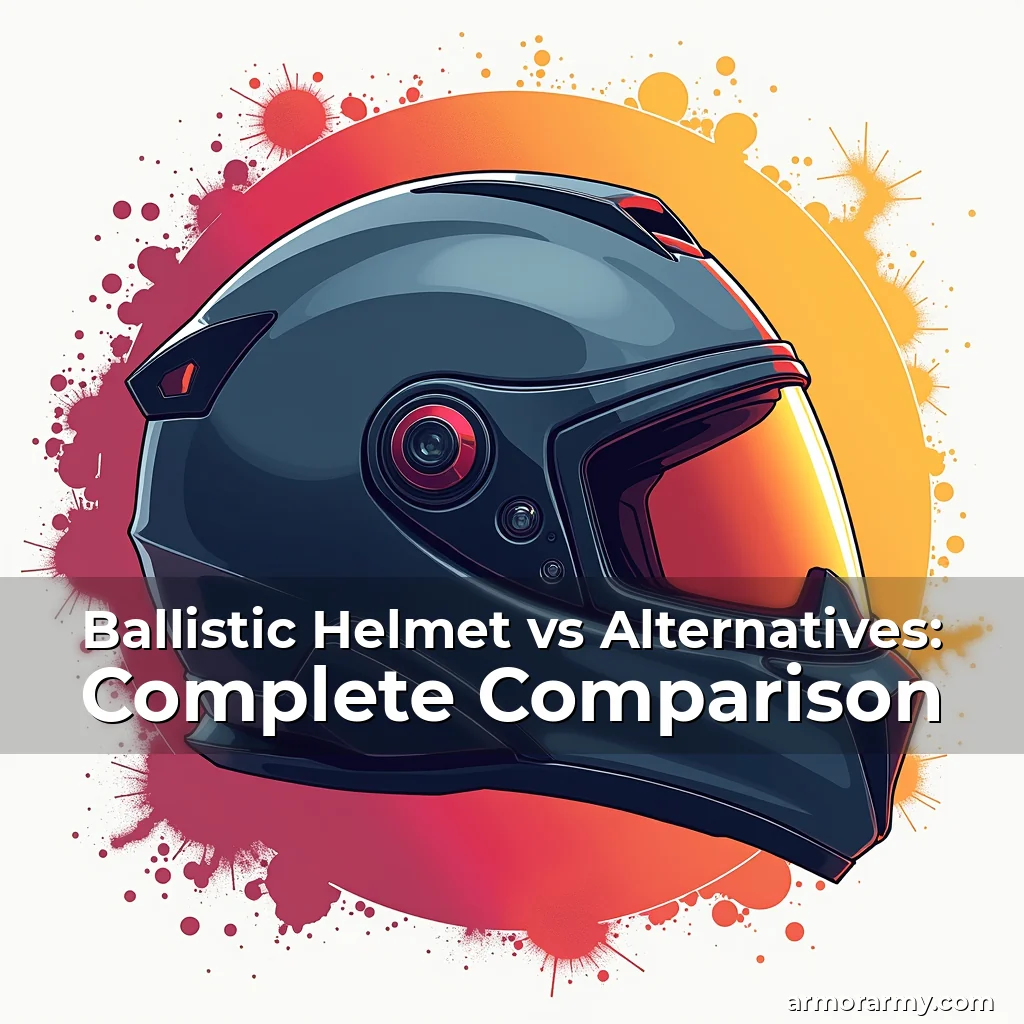
A ballistic helmet is specifically engineered to withstand impacts from projectiles ranging from low-velocity rounds to high-powered rifle calibers. These specialized pieces of equipment serve dual purposes: protecting against both blunt force trauma and penetrating injuries caused by firearms.
Modern ballistic helmets typically incorporate composite materials such as aramid fibers (most notably Kevlar) or ultra-high-molecular-weight polyethylene (UHMWPE). These substances offer exceptional strength-to-weight ratios while maintaining flexibility—a crucial factor in ensuring mobility during combat situations.
- Impact Absorption: Advanced shock-absorbing layers reduce the severity of concussive forces transmitted to the skull upon collision
- Penetration Resistance: Multi-layered structures distribute energy efficiently to prevent projectile passage through the helmet material
Evaluating Protective Capabilities Against Alternative Options
While there exist numerous forms of head protection available in the market, none match the level of defense provided by properly rated ballistic helmets. Traditional motorcycle helmets, though effective at mitigating road accidents, do little to protect against gunfire or explosive debris.
Sports helmets designed for activities like football or hockey also fall short compared to military-grade ballistic counterparts. While they excel at absorbing contact forces from collisions, they cannot resist penetration from bullets or fragments generated during explosions.
Comparative Performance Metrics Across Different Scenarios
Real-world testing has consistently shown that certified ballistic helmets outperform standard helmets in penetration resistance tests conducted under controlled laboratory conditions. For instance, a.308 Winchester round fired at close range fails to penetrate even entry-level tactical helmets meeting NIJ Level IIIa standards.
However, it’s worth noting that no helmet type offers absolute invulnerability. In cases involving shaped charges or high-explosive devices, additional protective measures beyond basic headgear become necessary regardless of helmet classification ratings.
Material Composition and Manufacturing Techniques
The evolution of helmet manufacturing has led to significant improvements in durability and weight reduction. Contemporary production methods employ vacuum bagging processes combined with resin transfer molding to create highly consistent composite laminates resistant to delamination under stress.
Innovations in nanotechnology have enabled manufacturers to integrate microscopic structural reinforcements within fiber matrices, enhancing tensile strength without increasing mass. Such developments contribute meaningfully toward improving operational efficiency for personnel requiring prolonged use periods.
- Kevlar Reinforcement: Woven fiber bundles arranged in orthogonal directions maximize load distribution capabilities
- Ceramic Inserts: Used selectively in higher threat classifications to intercept incoming projectiles through fragmentation mechanisms
Differentiating Between Tactical Variants and Civilian Models
Tactical variants differ markedly from civilian versions primarily due to enhanced protection levels mandated by military specifications. These include increased thicknesses, reinforced cheek plates, and integrated communication systems tailored for battlefield operations.
Civilian models often sacrifice some degree of protection for greater comfort features like adjustable suspension systems or noise-canceling ear cups. However, they still retain sufficient ballistics resistance suitable for self-defense applications outside war zones.
Evolutionary Improvements Over Time Periods
Helmets produced prior to the late 20th century were largely constructed from steel alloys offering limited mobility benefits. Modern iterations leverage polymer-based compounds providing comparable protection levels while reducing overall weight burden dramatically.
This transition has had profound implications for soldier endurance during extended missions where every ounce saved contributes positively toward physical stamina preservation. Additionally, newer generations exhibit superior thermal regulation properties aiding heat dissipation in harsh climates.
Practical Applications Across Various Professions
Law enforcement agencies widely adopt ballistic helmets equipped with built-in night vision compatibility slots and radio integration ports for seamless coordination during active duty engagements. These adaptations ensure minimal compromise between situational awareness and personal safety considerations.
Military organizations place particular emphasis on multi-role capabilities wherein helmets must function simultaneously as protective gear, communication hubs, and environmental sensors capable of detecting chemical agents or radiation exposure risks.
- Police Operations: Focus on rapid response scenarios demanding quick access to auditory cues via external microphones
- Military Missions: Prioritize modular attachment points enabling integration of GPS modules, laser rangefinders, etc.
Analyzing Limitations Compared With Conventional Head Protection
No single solution exists that universally supersedes traditional protective measures entirely. Motorcycle helmets remain indispensable for riders needing crash protection irrespective of whether firearms ever enter equation. Similarly, athletic headgear continues serving vital roles in preventing concussion injuries sustained during sporting events.
Despite advancements in materials science, current ballistic technologies possess inherent constraints regarding full body coverage extension. Additional protective elements including body armor vests or face shields may prove necessary depending upon mission profiles encountered regularly.
Environmental Considerations Influencing Choice Selection
Operating conditions play pivotal roles determining optimal selection criteria among different helmet categories. Personnel deployed in Arctic regions benefit from cold-weather variants featuring insulated liners whereas tropical deployments necessitate breathable mesh panels facilitating sweat evaporation.
Urban warfare settings require extra attention paid toward acoustic insulation characteristics influencing verbal communication clarity amidst ambient noise pollution commonly associated with metropolitan areas.
Cost-Benefit Analysis Comparing Investment Requirements
Acquiring top-tier ballistic helmets involves substantial initial expenditures reflecting sophisticated engineering involved behind their creation process. Prices vary considerably according to specified protection levels, brand reputation, and included accessory packages.
Nevertheless, considering long-term savings derived from reduced medical treatment costs resulting from prevented traumatic brain injuries validates these investments economically. Moreover, many jurisdictions mandate usage of approved ballistic gear for official duties thereby making compliance mandatory rather than optional preference.
Emerging Trends Shaping Future Developments
Ongoing research initiatives aim at developing lighter-weight alternatives utilizing graphene-infused composites promising unprecedented strength densities previously unattainable with existing methodologies. Early prototypes demonstrate encouraging results suggesting potential breakthroughs imminent within upcoming decades.
Smart helmet integrations represent another burgeoning trend incorporating IoT connectivity allowing real-time health monitoring functions tracking pulse rates, oxygen saturation levels, and hydration status automatically transmitting data wirelessly back to command centers located remotely.
- Self-Repair Technologies: Experimental coatings exhibiting regenerative properties after minor damage occurrences
- Bio-Metric Feedback Systems: Embedded sensors continuously analyzing wearer condition parameters adjusting internal climate control accordingly
Conclusion
The comparative assessment underscores that while ballistic helmets deliver unparalleled protection against firearm-related hazards, they are not universally applicable solutions for every scenario requiring head safeguarding measures. Recognizing appropriate contexts dictates wise investment decisions favoring most beneficial options available.
Ultimately, thorough understanding of distinct advantages offered by each category empowers informed choices aligned precisely with individual risk profiles ensuring maximum efficacy achieved through judicious selections made deliberately rather than haphazardly.