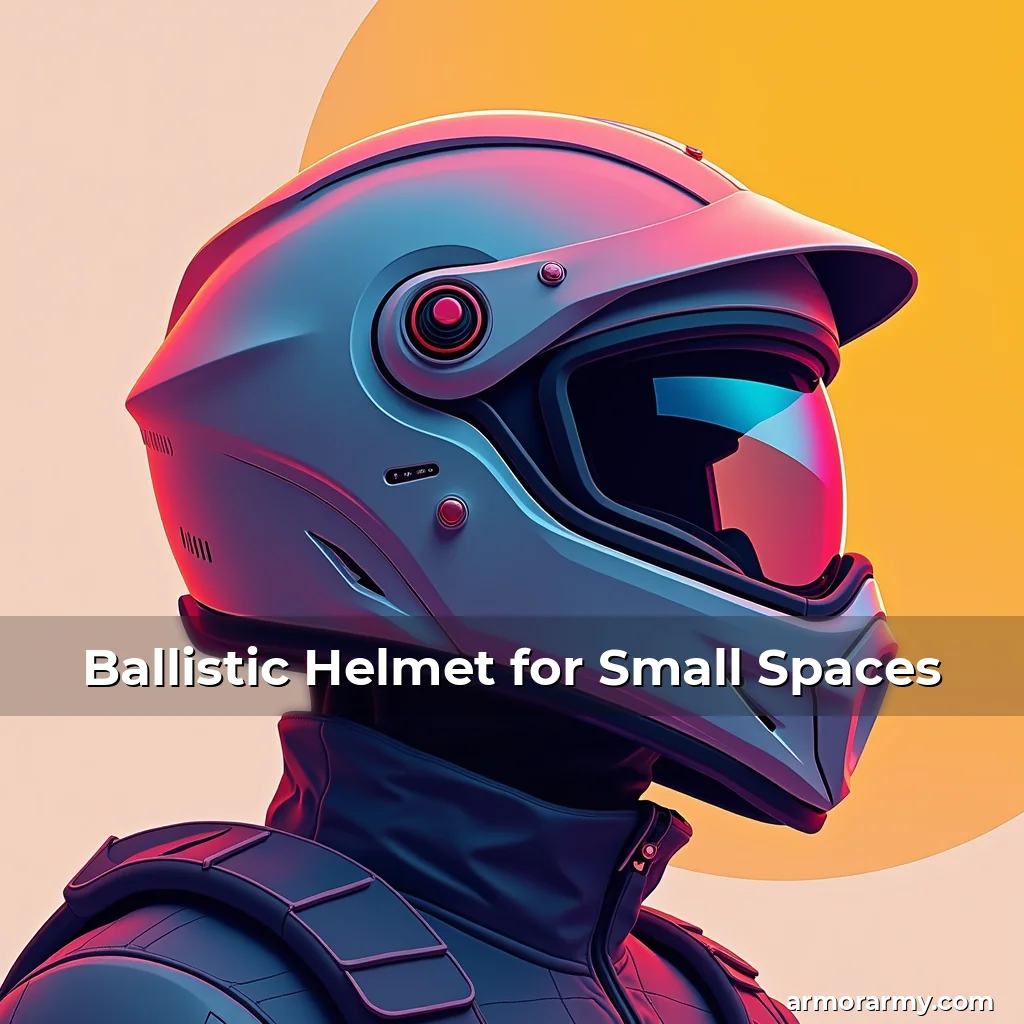
Ballistic Helmet for Small Spaces
The evolution of personal protective equipment has given rise to the development of ballistic helmets specifically engineered for use in constrained environments. These advanced pieces of gear combine cutting-edge materials with ergonomic designs to provide maximum impact resistance while maintaining mobility and comfort in tight spaces.
In military, law enforcement, and industrial settings, operators often find themselves working within narrow corridors, cramped vehicles, or cluttered indoor environments. A ballistic helmet optimized for small spaces addresses these challenges by offering streamlined profiles, reduced bulk, and enhanced flexibility without compromising critical protection capabilities.
Understanding Ballistic Helmet Technology
Ballistic helmets are designed to withstand high-velocity projectiles ranging from handgun rounds to rifle fire. Their effectiveness relies heavily on the type and arrangement of materials used in construction, which must balance protection with wearability.
Modern helmets incorporate layered composite structures featuring aramid fibers like Kevlar or para-aramid blends. These materials work synergistically to dissipate energy upon impact, preventing penetration while minimizing weight. Advanced versions also integrate ceramic tiles or transparent polycarbonate inserts for additional threat mitigation.
- Ceramic Inserts: Provide exceptional resistance against rifle calibers by fracturing projectile cores before they reach the inner layers
- Fiber Composites: Offer multi-hit capability through energy absorption across multiple woven strands
- Polycarbonate Visors: Combine impact resistance with optical clarity for situational awareness
Designing for Constrained Environments
Helmets intended for use in small spaces require meticulous attention to ergonomics and spatial dimensions. Engineers prioritize sleek profiles that allow for unhindered movement without compromising essential protection parameters.
The external contour of modern ballistic helmets for confined spaces typically measures less than 8 inches in height, enabling clearance in low-ceiling areas. Integrated cheek pads and adjustable suspension systems ensure secure fitment even during prolonged use in restrictive conditions.
Ergonomic Innovations
Recent advancements in human factors engineering have led to the creation of helmets with contoured interior linings made from memory foam or thermoplastic polymers. These adaptive surfaces conform to individual head shapes, distributing pressure evenly and reducing fatigue during extended operations.
Multifunctional mounting rails built into helmet frames accommodate tactical accessories like night vision devices or communication systems. These features are strategically positioned to avoid obstruction in close-quarters combat scenarios.
Material Science Behind Protection
The foundation of effective ballistic protection lies in material composition and structural integrity. Manufacturers continuously refine formulations to achieve optimal performance characteristics while meeting stringent weight limits.
Ultra-High-Molecular-Weight Polyethylene (UHWMPE) has gained prominence for its remarkable strength-to-weight ratio. This synthetic polymer exhibits higher tensile strength than steel while remaining lightweight enough for prolonged wear in challenging environments.
- Kevlar Reinforcement: Enhances flexibility while maintaining energy dissipation properties
- Titanium Alloys: Used selectively in reinforcement brackets for added durability without excessive mass
- Nanocomposite Coatings: Provide corrosion resistance and improved frictional properties for better grip
Testing Protocols and Certification Standards
Rigorous certification processes ensure that ballistic helmets meet established protection standards. Independent laboratories conduct extensive testing to verify compliance with international norms like NIJ Level IIIA or EN 1621 requirements.
Impact tests simulate realistic battlefield conditions using calibrated firearms firing standardized ammunition loads. Additional assessments evaluate thermal management, moisture retention, and long-term degradation resistance under extreme environmental stressors.
Real-World Performance Validation
Field trials involving special forces units provide critical feedback on helmet efficacy in dynamic operating conditions. Data collected from these evaluations help manufacturers fine-tune designs to address issues like heat buildup or visibility impairment during missions.
Laboratory simulations complement field data by replicating thousands of impacts per test cycle. This allows engineers to predict service life expectancy and identify failure modes before product deployment.
Operational Scenarios Requiring Specialized Helmets
In urban warfare contexts, operators frequently encounter densely populated areas with limited vertical clearance. Tactical helmets designed for such environments feature aerodynamic contours that reduce profile while preserving necessary defensive attributes.
Precision shooting teams benefit from streamlined helmet models that minimize interference with aiming mechanisms. These specialized variants often include integrated weapon-mounted sights alignment guides for quick target acquisition.
- Indoor Operations: Compact designs enable safe navigation through doorways and hallways
- Vehicular Deployments: Reduced height prevents contact with vehicle ceilings during transport
- Disaster Response: Lightweight configurations support prolonged use in rescue operations
Evolution of Ballistic Helmet Design
Historically, early iterations of protective headgear prioritized heavy-duty steel constructions that offered substantial protection at considerable weight penalties. Contemporary designs emphasize lightweight solutions without sacrificing security standards.
The shift toward modular architectures enables users to customize their helmets according to mission-specific requirements. Interchangeable visor panels, attachment points, and interior padding systems create adaptable platforms suited to diverse operational demands.
Future Direction of Protective Gear Development
Ongoing research explores integrating smart textiles into helmet fabrics that could monitor vital signs or detect trauma indicators in real-time. These innovations aim to enhance situational awareness while improving medical response times in critical incidents.
Advancements in nanotechnology may soon yield self-repairing materials capable of autonomously mending minor damage sustained during operations. Such breakthroughs promise longer service lives and reduced maintenance requirements for frontline personnel.
Safety Considerations and Proper Usage
Correct usage protocols are essential to maximize protection from ballistic helmets. Users must undergo thorough training sessions covering fitting procedures, donning/doffing techniques, and routine inspection routines.
Regular cleaning and maintenance routines prevent accumulation of dirt, sweat, and debris that could compromise structural integrity over time. Inspection checklists should include examining for cracks, worn straps, or damaged protective components.
- Daily Inspections: Check for visible damages or foreign objects lodged within the shell
- Monthly Maintenance: Clean internal lining and verify strap tension
- Annual Recertification: Submit helmets to official testing facilities for continued approval status
Economic Implications and Cost-Benefit Analysis
While advanced ballistic helmets represent a significant investment, their value proposition becomes evident when considering risk mitigation benefits. The cost of replacement compared to the financial burden of injuries underscores the importance of adequate protection.
Manufacturers employ economies of scale production methods to make premium protective gear accessible to various sectors, including military, law enforcement, and private security industries seeking reliable safety solutions.
Community Engagement and Industry Standards
Active participation from end-users helps drive innovation cycles by providing direct feedback on current equipment shortcomings. User groups and professional associations play pivotal roles in influencing technical specifications through collaborative efforts.
Standardization bodies regularly update regulations to reflect technological advances while ensuring consistent quality benchmarks across different manufacturers’ offerings. Cross-industry partnerships foster knowledge exchange that accelerates progress in protective gear development.
Conclusion
The development of ballistic helmets for small spaces represents a convergence of material science, ergonomic design, and rigorous testing methodologies aimed at maximizing protection in confined environments. As threats evolve, so too does the need for increasingly sophisticated protective gear.
By understanding the principles underlying these specialized helmets, users can make informed decisions about selecting the most appropriate equipment for their specific operational needs. Continued investment in research and development ensures that tomorrow’s protective solutions will be even more effective than today’s advancements.