The Evolution and Strategic Role of Troop Carriers in Modern Military Operations
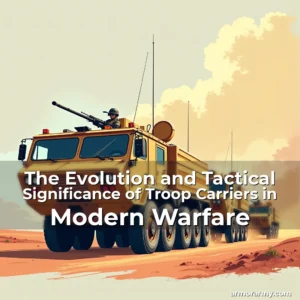
Troop carriers have played an indispensable role in shaping the outcomes of military conflicts across centuries. From ancient chariots to modern armored vehicles, these platforms are designed to transport soldiers swiftly and safely from one battlefield location to another. Their evolution reflects advancements in technology, logistics, and strategic warfare.
In contemporary armed forces, troop carriers serve as vital components of mobility, ensuring rapid deployment and tactical flexibility during both offensive and defensive operations. They enable armies to maintain operational tempo while minimizing exposure to enemy fire through efficient movement and protection capabilities.
Historical Development of Troop Carrier Vehicles
The concept of transporting troops in dedicated vehicles dates back to antiquity when horse-drawn wagons were used by civilizations such as the Romans and Greeks. These early forms provided rudimentary means of moving larger numbers of infantry units over long distances compared to marching on foot.
During medieval times, knights often rode into battle alongside their companions, but organized transportation systems remained limited until advances in engineering led to improved road networks and carriage designs suitable for mass troop movements.
- Renaissance Era: The introduction of gunpowder weapons necessitated new methods of transporting artillery pieces along with supporting personnel, leading to specialized wagon trains that could traverse rough terrain.
- Napoleonic Wars: French Emperor Napoleon Bonaparte famously utilized horse-drawn carriages extensively during his campaigns, enabling faster redeployment of troops between key locations without relying solely on traditional marches.
World War I and the Birth of Motorized Troop Transport
The outbreak of World War I marked a significant turning point in the development of motorized troop transport solutions. Traditional cavalry units proved ineffective against entrenched positions protected by machine guns and barbed wire, prompting militaries to seek alternative methods for deploying infantry quickly.
Early attempts at mechanizing troop movement involved adapting existing automobiles and trucks for military use. Although primitive by today’s standards, these efforts laid the foundation for future developments in vehicle design focused specifically on carrying combat-ready personnel.
Pioneering Innovations During WWI
One notable innovation was the British Mark V tank, which not only provided heavy firepower but also acted as a mobile platform capable of transporting small groups of soldiers through trench lines previously inaccessible to conventional forces.
Military engineers worked tirelessly to develop tracked vehicles that could navigate muddy and uneven surfaces common in war-torn Europe. This research culminated in successful prototypes tested during various offensives throughout the Western Front.
Interwar Period and the Rise of Mechanized Warfare
Between the two world wars, military theorists began emphasizing the importance of speed and surprise in achieving victory. This shift gave rise to doctrines advocating for fully mechanized divisions equipped with tanks, armored cars, and troop-carrying vehicles operating in coordinated formations.
The interwar period saw nations investing heavily in developing standardized military vehicles capable of performing multiple roles, including troop transport, reconnaissance, and direct engagement with enemy forces. These vehicles featured reinforced hulls and basic armaments for self-defense purposes.
World War II and the Golden Age of Troop Carriers
During World War II, troop carriers reached unprecedented levels of sophistication and effectiveness. Advances in automotive technology enabled manufacturers to produce reliable, high-capacity vehicles tailored explicitly for military needs.
The United States Army Air Forces pioneered aerial troop transport using aircraft like the Douglas C-47 Skytrain, which became essential for airborne operations during D-Day and other critical missions involving paratroopers dropping behind enemy lines.
Airborne Assault and the Role of Airlift Capabilities
The ability to deploy entire regiments via parachute significantly altered the nature of warfare, requiring extensive logistical coordination and specialized training programs for both pilots and ground troops involved in such operations.
Civilian airliners were rapidly converted into military transports during WWII due to shortages of purpose-built aircraft. Modifications included reinforcing fuselages, adding external cargo hooks, and equipping planes with emergency evacuation slides for quick disembarkation of passengers under combat conditions.
Post-War Developments and Cold War Adaptations
Following World War II, many countries sought ways to adapt their military infrastructure to emerging threats posed by nuclear deterrence strategies. While large-scale invasions seemed less likely, maintaining readiness for regional conflicts required continued investment in versatile troop carrier fleets.
The Korean War demonstrated the value of having flexible transport options available at short notice. Helicopters emerged as particularly useful assets for inserting troops into difficult-to-reach areas where traditional landing zones might be unavailable or too dangerous to approach openly.
Modern Advancements in Troop Carrier Design
Contemporary troop carriers incorporate advanced materials science principles to enhance durability while reducing overall weight. Armor plating is now commonly integrated into vehicle frames rather than being added externally after construction.
Electronic warfare systems have become standard features on modern troop carriers, providing real-time situational awareness data crucial for avoiding ambushes and coordinating attacks effectively with friendly forces deployed nearby.
Integration With Digital Command Structures
Today’s troop carriers are equipped with satellite communication devices allowing them to receive orders instantly regardless of geographical location. This capability ensures seamless integration within broader command hierarchies even during fast-paced engagements.
Vehicles can transmit GPS coordinates continuously so that commanders track troop movements accurately and adjust tactics accordingly based upon changing circumstances on the battlefield.
Fuel Efficiency and Sustainability Initiatives
As global concerns over climate change grow increasingly urgent, defense industries are exploring alternatives to fossil fuels traditionally relied upon by military vehicles worldwide. Research initiatives include testing hybrid-electric propulsion systems suitable for medium-sized troop carriers intended primarily for land-based deployments.
Sustainable practices extend beyond engine technologies; some newer models utilize recycled composite materials derived from decommissioned equipment parts, thereby reducing waste generated during production cycles associated with manufacturing fresh components from raw resources each time.
Training Programs for Troop Carrier Operators
Operating modern troop carriers requires specialized knowledge covering mechanical maintenance routines, navigation procedures, and safety protocols applicable during both peacetime exercises and actual conflict scenarios. Comprehensive training curricula must address all aspects relevant to safe handling under diverse environmental conditions.
Simulator technology has revolutionized how operators learn complex maneuvers required when maneuvering through narrow passages or dealing with unexpected obstacles encountered en route to designated destinations. Virtual reality applications allow trainees experience realistic situations before ever stepping inside a physical vehicle.
Logistical Challenges Associated With Troop Carrier Deployment
Deploying troop carriers involves intricate planning processes aimed at optimizing fuel consumption rates and minimizing delays caused by traffic congestion near forward operating bases. Efficient scheduling algorithms help determine optimal routes considering factors such as weather patterns and potential enemy activity along known supply corridors.
Maintaining spare parts inventories presents another challenge since certain components may require special ordering procedures taking several days to arrive once initial requests are submitted through formal channels established within respective military branches responsible for upkeep activities related to fleet management.
Economic Implications of Maintaining Large-Scale Troop Carrier Fleets
Governments face considerable financial obligations tied to acquiring, maintaining, and upgrading vast numbers of troop carriers regularly. Budget allocations must account for periodic replacement schedules dictated by technological obsolescence timelines inherent within evolving defense requirements.
Cost considerations influence decisions regarding whether to pursue indigenous production capabilities versus importing ready-made solutions developed abroad by private sector companies specializing exclusively in defense-related product offerings catering mainly toward government clients seeking competitive bids fulfilling procurement mandates set forth annually by legislative bodies overseeing national security priorities.
Future Trends Shaping Next Generation Troop Carriers
Advances in autonomous driving technologies promise transformative changes affecting how troop carriers operate independently without constant human oversight. Self-driving vehicles could potentially reduce casualties among drivers exposed to hostile environments while improving mission efficiency metrics measured against traditional manned counterparts currently employed globally.
Artificial intelligence will play pivotal roles in decision-making frameworks guiding autonomous troop carriers towards pre-defined objectives determined beforehand through AI-driven simulations predicting probable encounters with adversaries along projected paths calculated dynamically based upon incoming sensor feeds processed instantaneously by onboard computers analyzing vast amounts of visual/audio information collected continuously from surroundings.
Conclusion
Troop carriers continue to evolve in response to shifting geopolitical landscapes and technological breakthroughs reshaping the very fabric of modern warfare itself. Their significance remains undiminished despite ongoing innovations aimed at enhancing performance characteristics associated with every aspect covered thus far.
Investing in next-generation troop carrier solutions offers tangible benefits extending well beyond immediate operational gains achievable through current models still widely utilized around the world today. As we look ahead towards uncertain futures filled with unpredictable challenges, preparing ourselves adequately now becomes imperative lest we find ourselves unprepared come what may.